Three Months of Nothing: When Summer Vacation Actually Meant Freedom
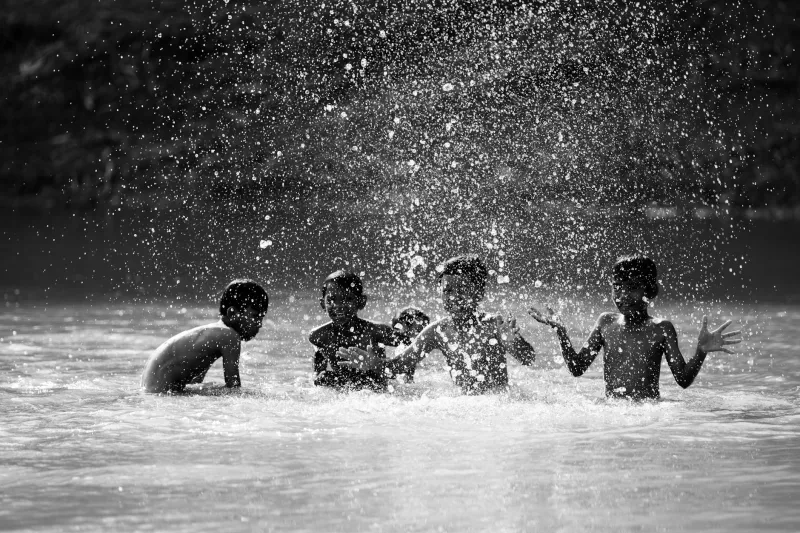
Every June morning in 1975, ten-year-old Michael Rodriguez woke up in his Phoenix bedroom with absolutely nothing to do and nowhere to be. No summer camp pickup at 8 AM, no enrichment classes, no scheduled playdates arranged weeks in advance. Just three months stretching ahead like an empty canvas, waiting to be filled with whatever he and his friends could dream up.
This was normal. For most of the 20th century, summer vacation meant exactly that — a vacation from structure, schedules, and adult-directed activities. Kids were expected to entertain themselves, and somehow they managed to survive entire summers without a single organized activity.
The Great Unstructured Experiment
American childhood summers operated on a simple principle: turn kids loose and let them figure it out. Parents worked, children roamed, and everyone understood this arrangement. The neighborhood became a vast playground supervised by a loose network of mothers who kept one eye on their housework and another on the general chaos outside.
In suburban Detroit, the Martinez family's summer routine was typical for the era. After breakfast, their three kids disappeared into the neighborhood and weren't expected home until the streetlights came on. No cell phones, no GPS tracking, no hourly check-ins. Just a simple rule: be home for dinner.
These unsupervised summers created a unique childhood culture. Kids developed elaborate games that lasted for weeks, built forts in vacant lots, organized neighborhood-wide competitions, and learned to resolve conflicts without adult intervention. They got bored — really, genuinely bored — and then figured out how to cure that boredom through their own creativity.
The Boredom That Built Character
Modern parents panic at the first sign of childhood boredom, immediately suggesting activities or handing over screens. But 1970s parents treated boredom like a natural childhood condition that would resolve itself given enough time.
"I'm bored" was met with "Go find something to do" — and kids actually did. They invented games with neighborhood rules that made no sense to adults but perfect sense to the participants. They created elaborate fantasy worlds in backyards, spending entire afternoons pretending to be explorers, detectives, or space travelers.
The Johnson kids of Sacramento spent one entire summer of 1978 building what they called "Stick City" — an elaborate fort complex in the empty lot behind their house. No adults helped design it, no safety inspections were conducted, and no permits were filed. It was just kids with hammers, nails, and unlimited time creating something entirely their own.
When Neighborhoods Raised Children
The unstructured summer worked because entire communities participated in a loose form of collective child-rearing. Mrs. Peterson might yell at any kid riding their bike too fast past her house. Mr. Garcia would hand out popsicles to whoever was playing in his yard. The corner store owner knew which kids were allowed to buy candy and which needed to call their parents first.
This system created what sociologists now call "social capital" — the web of relationships and shared responsibility that helped communities function. Kids learned to navigate different adult personalities, understand neighborhood boundaries, and develop social skills that couldn't be taught in any structured program.
Summer employment for teenagers was also dramatically different. Fourteen-year-olds could find legitimate jobs — not internships or resume-building experiences, but actual work that paid real money. They delivered newspapers, mowed lawns, babysat younger kids, and worked at local businesses that valued their enthusiasm over their credentials.
The Transformation
The shift away from unstructured summers didn't happen overnight. It began in the 1980s with increased parental anxiety about safety, accelerated in the 1990s with growing emphasis on academic achievement, and reached full intensity in the 2000s with the rise of competitive parenting culture.
Summer camps, once reserved for wealthy families, became standard middle-class expectations. Academic summer programs promised to prevent "learning loss." Enrichment activities offered to build skills that would look good on future college applications. The idea that kids might spend summer days doing absolutely nothing began to seem not just wasteful, but almost neglectful.
By 2010, the average American child's summer included multiple organized activities, structured learning experiences, and carefully arranged social interactions. The three-month vacation had become a three-month extension of the school year, complete with schedules, objectives, and measurable outcomes.
What Research Says We Lost
Modern developmental psychology suggests those boring summers might have been secretly brilliant. Unstructured time allows children to develop executive function skills — the ability to plan, organize, and manage their own activities. It builds resilience, creativity, and independence in ways that adult-directed activities simply cannot replicate.
Studies of childhood development consistently show that kids who experience regular unstructured play develop better problem-solving skills, more creativity, and stronger social bonds with peers. The boredom that modern parents work so hard to prevent may actually be essential for healthy development.
Dr. Sarah Chen, who studies childhood development at UCLA, notes that many of today's college students struggle with basic independence skills that previous generations developed naturally during unstructured summers. They can manage complex academic schedules but have trouble figuring out how to spend an afternoon without external direction.
The Summer That Changed Everything
The unstructured summer vacation created a specific type of American childhood — one that prioritized independence, creativity, and self-direction over achievement and optimization. Kids learned to entertain themselves, resolve conflicts with peers, and navigate their communities without constant adult supervision.
Those skills served them well in adulthood. The generation that grew up with nothing-to-do summers became the entrepreneurs, innovators, and independent thinkers who built much of modern America. They learned early that boredom was just a starting point for creativity, not a problem that needed immediate solving.
Today's highly scheduled childhood summers produce different results — kids who are excellent at following directions and managing complex schedules, but who sometimes struggle with the open-ended challenges that define adult life.
The next time you hear a child complain about being bored, remember that previous generations of American kids turned that same complaint into the foundation for lifelong creativity, independence, and resilience. Sometimes the best thing adults can do is absolutely nothing at all.