Hello, Operator: When Real People Connected America's Conversations
Hello, Operator: When Real People Connected America's Conversations
Pick up your phone today and you're instantly connected to anyone, anywhere in the world. Dial a number, hear a ring, start talking. It's so automatic we barely think about it. But for nearly a century of American telecommunications, every single phone call required the intervention of another human being — usually a young woman sitting at a massive switchboard, manually plugging cables to connect your conversation.
These operators weren't just technical workers. They were the living, breathing nervous system of American communities.
The Switchboard: Command Center of Small-Town America
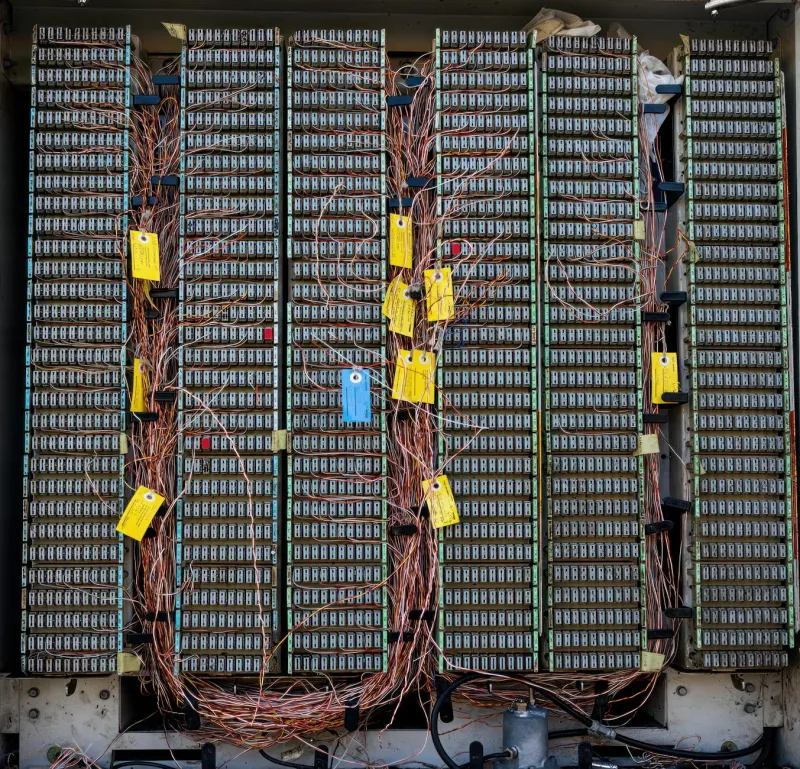
Walk into any telephone office in 1940s America and you'd find rows of women seated before towering panels of jacks, switches, and blinking lights. Each incoming call lit up a bulb. Each operator would plug in her headset, say "Number, please?" and physically connect callers by inserting cables into the appropriate jacks.
But the technical work was only part of the job. These women became unofficial mayors of their communities, handling everything from wake-up calls to emergency dispatches. They knew who was dating whom, which families were struggling financially, and when someone hadn't been seen for a few days.
In small towns across America, the telephone operator was often the most informed person in the community — and sometimes the most powerful.
When Privacy Was a Luxury
Today's phone calls are private by default. Back then, privacy required special effort. Operators could listen to any conversation simply by not unplugging from the connection. Most were professional and discreet, but the temptation was always there.
Party lines made privacy even more elusive. Multiple families shared the same phone line, distinguished only by different ring patterns — two short rings for the Johnsons, one long ring for the Smiths. Anyone could pick up and listen to their neighbors' conversations, and many did.
Operators became referees in this system, reminding eavesdroppers to hang up and mediating disputes when someone hogged the line too long. They knew everyone's secrets because privacy, as we understand it today, simply didn't exist.
The Emergency Response Network
Before 911, before ambulances and police departments had direct numbers, the telephone operator was America's first responder. Heart attack? Fire? Break-in? You called the operator first.
These women maintained mental directories of every doctor, police officer, and volunteer firefighter in their coverage area. They knew which physician made house calls, which volunteer firemen were home during the day, and how to reach the sheriff at any hour. During emergencies, they became air traffic controllers, coordinating multiple responders and keeping families informed.
Operators often stayed on the line during crises, providing comfort and instructions until help arrived. They talked people through medical emergencies, helped coordinate search parties for missing children, and served as communication hubs during natural disasters.
The Social Fabric Weavers
Telephone operators weren't just connecting calls — they were connecting lives. They knew when babies were born, when loved ones died, and when families needed extra support. They'd remember to ask about someone's sick mother or congratulate newlyweds they'd helped coordinate wedding calls for.
Many operators provided unofficial social services. They'd give directions to lost travelers, recommend local businesses to newcomers, and even serve as informal matchmakers. "You should talk to Mary Peterson," an operator might suggest to a lonely widower. "She's been asking about you."
This human touch extended to customer service in ways we've completely lost. Operators would remember regular callers' preferences, help elderly customers navigate the system, and go out of their way to connect important calls that came in after hours.
The Technology That Replaced Relationships
Direct dialing began appearing in major cities during the 1950s, but it took decades to reach rural America. The transition wasn't just technological — it was cultural. Communities lost their human communication hub, their unofficial information center, their emergency coordinator.
Automatic switching systems could connect calls faster and more efficiently than human operators, but they couldn't ask about your sick grandmother or remember that you preferred to be called at work rather than home. The telephone system gained speed and lost soul.
When Work Was Community Service
Being a telephone operator was more than a job — it was a form of community service. These women were trusted with intimate family information, relied upon during emergencies, and expected to maintain the social connections that held small towns together.
The work was demanding and often poorly paid, but it came with social status. The telephone operator knew everything and everyone. She was consulted on matters far beyond telecommunications. Her opinion carried weight because she had access to information others didn't.
Many operators worked in the same communities for decades, watching children grow up through their phone calls, monitoring family dramas as they unfolded, and serving as living archives of local history.
The Price of Progress
By the 1970s, direct dialing had eliminated most operator positions. The few that remained handled long-distance calls and special services, but the era of the community telephone operator was over. With it disappeared a uniquely American institution — the person who literally connected everyone to everyone else.
Today's communication is faster, cheaper, and more private than anything those operators could have imagined. We can video chat with people across the globe, send messages instantly, and access unlimited information without asking anyone for help.
But we've lost something irreplaceable: the human element that made communication a community experience. No algorithm knows when you're having a bad day. No automated system checks on elderly neighbors who haven't made calls recently. No app provides the personal touch of someone who remembers your voice and asks about your family.
The Echo of Human Connection
The next time your phone connects instantly to someone thousands of miles away, remember the women who once made every call possible through personal attention and community knowledge. They weren't just operating equipment — they were operating the social networks that held America together.
In our rush toward efficiency and automation, we've gained incredible capability but lost the human relationships that once made communication about more than just information transfer. The telephone operator's booth is empty now, but the need for human connection in our technological world remains as strong as ever.