The Kitchen Was Never Closed: The Invisible Labor Behind the American Family Meal

Photo by Museum of New Zealand Te Papa Tongarewa on Unsplash
If you've ever tried to bake bread from scratch on a Tuesday — actual yeast bread, not the cheat version — you already have a faint sense of what daily life once required. Now imagine doing that while also simmering a stock from last night's chicken carcass, canning a batch of tomatoes before they turned, planning five more meals for the week, and starting dinner for six by three in the afternoon. That was not an exceptional day in a mid-century American household. That was just Wednesday.
The Kitchen as Production Floor
In the 1940s, '50s, and into the '60s, the American home kitchen operated with a logic that looked less like modern cooking and more like small-scale manufacturing. Nothing was wasted. Everything had a use. The fat skimmed from a pot roast became the base for next week's gravy. Stale bread became breadcrumbs, then stuffing, then something else entirely. Bones became broth. The garden, if you had one, became the pantry.
Preservation was a seasonal imperative, not a hobby. Come late summer and early fall, millions of American women were running assembly lines in their own kitchens — blanching, packing, sealing, and processing Mason jars of tomatoes, beans, peaches, and corn that would carry the family through winter. The Ball Blue Book of canning was as essential as any cookbook. Knowing how to properly seal a jar wasn't a skill for the enthusiast. It was basic competence.
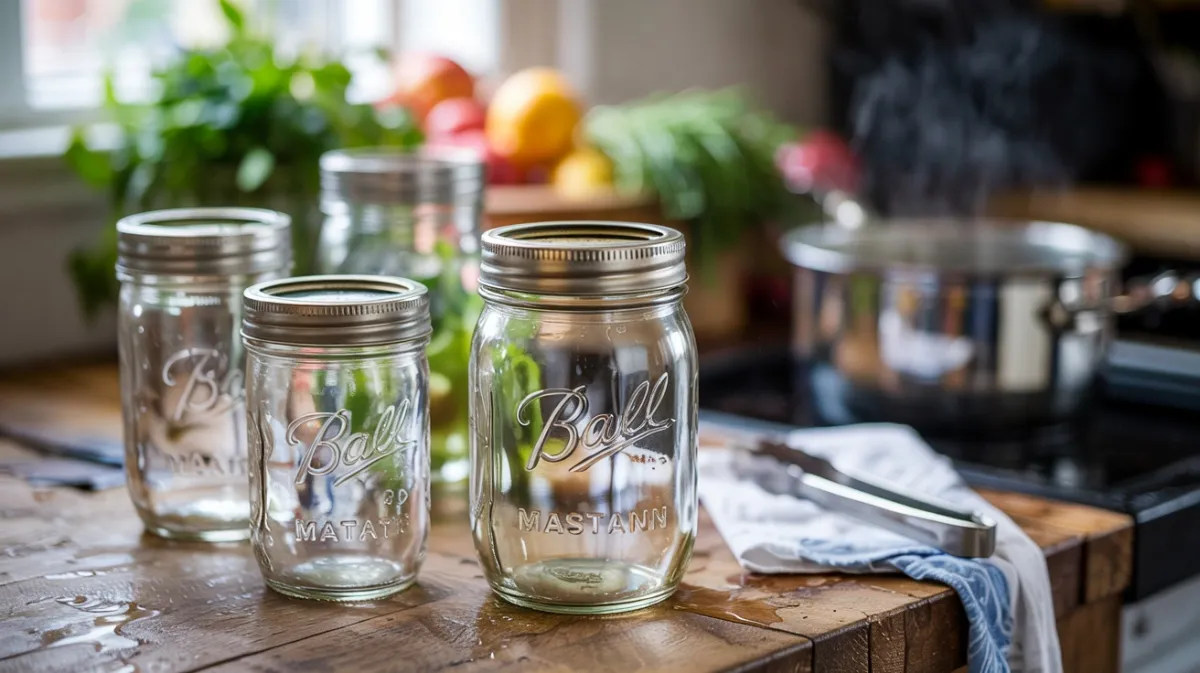 Photo: Mason jars, via prokitchening.com
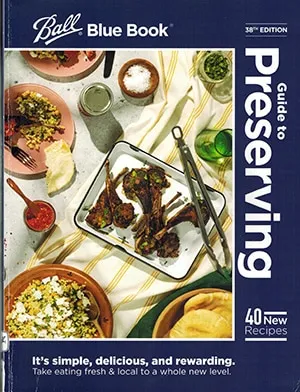 Photo: Ball Blue Book, via growagoodlife.com
Bread was baked at home because store-bought bread was considered inferior, and in many rural areas, the store was too far away for regular trips anyway. Pies were made from scratch because there was no other kind. Stocks were simmered for hours because the flavor of a good broth was understood to be foundational, not optional.
The Hours Nobody Counted
Studies from the mid-20th century estimated that American homemakers spent between 50 and 60 hours per week on household labor. Food-related work — shopping, preparing, cooking, cleaning up, preserving, and planning — accounted for a substantial portion of that. It was, by any reasonable measure, a full-time job. It just wasn't called one.
The skill involved was also routinely underestimated, both at the time and in hindsight. Making a pie crust that doesn't fall apart, knowing when a jam has reached the right set, understanding how long a particular cut of meat needs to braise — these are not instincts. They are learned competencies, passed down from mother to daughter across generations, refined through repetition and failure and more repetition.
And they were disappearing even before the frozen food aisle arrived to accelerate the process.
The Great Convenience Pivot
The transformation didn't happen overnight. It was a slow accumulation of small surrenders, each one reasonable on its own. Canned soup in the 1930s. Frozen vegetables in the '40s. TV dinners in the '50s. Instant cake mix, condensed cream of mushroom soup as a universal sauce, the rise of the drive-through, the microwave, the rotisserie chicken at the deli counter. Each innovation peeled away another layer of home food production and handed it to someone else.
By the time dual-income households became the norm in the 1970s and '80s, the timing was almost convenient. Women entering the workforce in large numbers needed the hours that scratch cooking consumed. Processed food and convenience products were ready and waiting to fill the gap. The market had, in some ways, anticipated the social shift.
What followed was a genuine gain in freedom — real, meaningful freedom. Time that had been absorbed by the kitchen could now go toward careers, education, and choices that hadn't previously been available. That's not a small thing. It would be dishonest to romanticize the old arrangement without acknowledging what it cost the people who maintained it.
What Went With the Stock Pot
But something was also quietly lost, and it's worth naming it plainly.
Flavor, for one. A roast chicken made from a bird that spent its life moving around, finished with a pan sauce built from real drippings, served alongside vegetables that were grown in soil and picked at the right moment — that is a different eating experience than its modern equivalent. Not better in every way. But different in ways that matter, particularly to people who remember both.
Nutrition is more complicated, because mid-century American diets had their own serious problems. But the reliance on ultra-processed food that has characterized the last four decades comes with documented health consequences that the scratch-cooking era largely avoided.
And then there's cultural transmission — the thing that's hardest to quantify and easiest to lose. Recipes that lived in no cookbook, only in the hands and memory of one woman who learned them from another. Techniques that assumed decades of accumulated knowledge. The understanding that food was not just fuel but a form of care, a language, a way of saying something that didn't have words.
A lot of that knowledge simply didn't survive the transition. It wasn't written down because it didn't need to be. Until suddenly it did, and by then, the people who held it were gone.
Then What Now
The modern food renaissance — sourdough starters, fermentation, farmers markets, the whole-animal butchery revival — can look like nostalgia. Sometimes it is. But it can also be read as a generation quietly trying to recover something that was handed off too quickly, without fully understanding what it was worth.
The labor that built the mid-century American table was real, and it was enormous, and it was largely invisible. Honoring it doesn't mean pretending it wasn't also exhausting, or that the women who performed it had much say in the matter. It means understanding that what replaced it wasn't a straight upgrade — it was a trade. And like most trades, it came with terms that weren't fully disclosed until later.