The Art of Waiting: How America Traded Its Last Quiet Moments for a Progress Bar
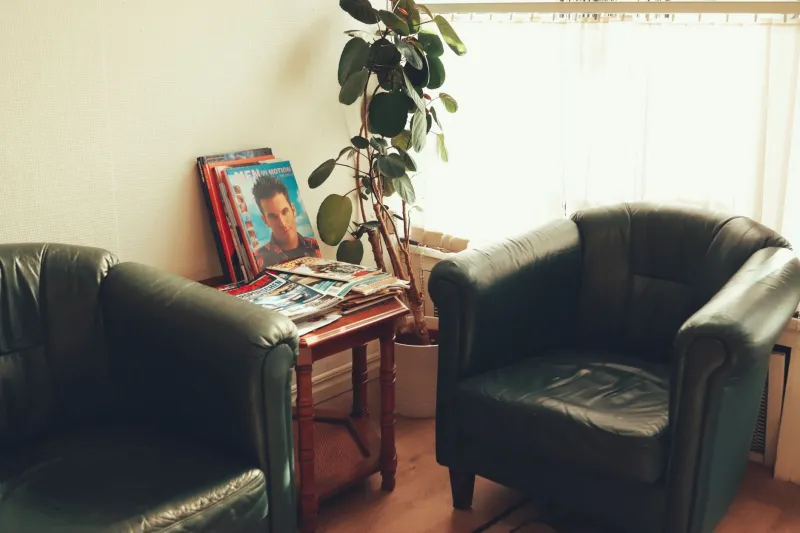
Somewhere in the mid-1990s, a doctor's waiting room still had a stack of magazines on a side table. Not current ones — never current ones. A People from eight months ago. A Reader's Digest with the cover half torn. A copy of Sports Illustrated that had already been read by approximately forty-seven strangers before you picked it up. And yet, you read it. Because what else were you going to do?
That question — what else are you going to do? — used to have a simple answer. You waited. You sat. You existed in the unhurried company of other people who were also just waiting. And somehow, that was fine.
It is almost impossible to explain that world to someone under thirty.
The Waiting Room as a Social Institution
Before smartphones turned every idle moment into a content consumption opportunity, waiting was woven into the fabric of American daily life in ways we've largely forgotten. The DMV. The deli counter. The bank. The doctor's office. The pharmacy. Each of these places had its own particular rhythm, its own cast of regulars, its own unspoken code of conduct.
You took a number. You found a seat. You looked around.
And here's the thing — you talked to people. Not always, and not deeply, but enough. The woman next to you at the deli counter would mention that the turkey looked good today. The guy at the DMV would grumble about the line and you'd grumble back and suddenly you were in it together. A waiting room was, in its low-key way, a community space. A place where Americans of different backgrounds and income levels sat in the same plastic chairs and stared at the same water-stained ceiling tiles.
There was an accidental democracy to it.
The Business of Killing Time
The shift started gradually. Pagers gave way to cell phones, and suddenly you could make a call from the waiting room. Then came the smartphone, and then the app, and then the entire economy reorganized itself around the premise that waiting is a failure state.
Now you can track your pizza delivery in real time. You can see exactly where your Uber is, down to which block it's on. You can check in for your doctor's appointment from your car and get a text when they're ready for you, so you never have to sit in that room at all. Airlines send gate change alerts before the board updates. Banks let you deposit a check by photographing it in your kitchen.
All of this is, objectively, more efficient. And yet.
There is something worth examining in the fact that the entire infrastructure of modern American life has been redesigned around the elimination of unscheduled downtime. Waiting has been reframed not as a neutral experience but as a bug — a flaw in the system that smart design should eliminate. The implicit message is that your time is too valuable to spend sitting still.
What the Wait Was Actually Doing
Here's what nobody talks about: waiting rooms were one of the last places Americans regularly sat with their own thoughts.
There was no algorithm feeding you content. No notification pulling your attention sideways. You sat there, and your mind wandered, and sometimes that wandering was where the interesting stuff happened. You'd think through a problem that had been nagging at you. You'd notice something funny about the room. You'd overhear a conversation and feel a small, unexpected wave of connection to a stranger's life.
Psychologists have a term for this kind of unfocused mental state: the default mode network. It's what your brain does when it's not actively tasked with something, and it turns out to be enormously important for creativity, memory consolidation, and emotional processing. Basically, your brain needs boredom the way your body needs sleep.
The waiting room was, accidentally, one of the most reliable boredom-delivery systems America had.
The New Waiting (Which Isn't Really Waiting)
We haven't eliminated waiting entirely, of course. We've just changed its texture. Now you wait for a package and refresh the tracking page seventeen times. You wait for a text back and check your phone every forty seconds. You wait for a flight and spend three hours scrolling through content you'll forget by the time you board.
This is waiting with your nervous system fully activated. It's waiting that feels like doing something, but isn't. And it leaves no room for the particular kind of mental quiet that the old waiting rooms accidentally provided.
The magazines were never really the point. The point was that there was nothing else to do, and in that nothing, something happened.
Then What Now
It would be naive to argue that we should bring back the forty-five minute DMV wait as a public health intervention. The efficiency gains are real, and nobody genuinely misses sitting in a plastic chair under fluorescent lighting for an hour.
But it's worth being honest about the trade. When America engineered the wait out of daily life, it also engineered out a certain kind of stillness — the accidental kind, the kind that didn't require a meditation app or a scheduled self-care block. The kind that just happened because you were a person in a room with nowhere else to be.
The magazines were outdated. The chairs were uncomfortable. The guy two seats over was talking too loud on his phone.
And somehow, it was still its own kind of peace.