The Sunday Best Is Gone: How Americans Stopped Dressing Like the Occasion Mattered
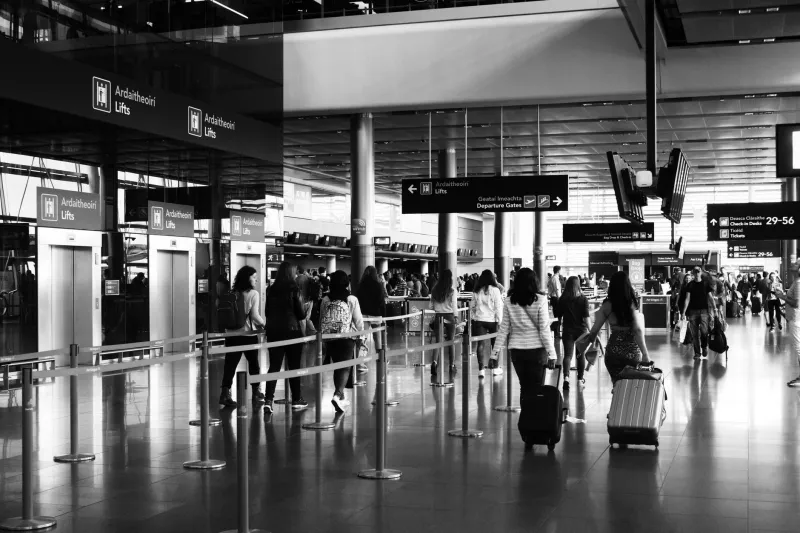
Pull up a photograph of passengers boarding a commercial flight in 1962. Look at what they're wearing.
The men are in suits or sport coats. Ties, mostly. The women are in dresses or skirt sets, heels, gloves in some cases. Even the children look like they're headed somewhere important. Nobody is in sweatpants. Nobody is in flip-flops. Nobody looks like they just rolled out of bed and grabbed whatever was on the floor.
Now look at the departure gate at any American airport today. You know what you'll see.
This isn't a complaint — or at least, it doesn't have to be. But it is a genuine cultural shift worth examining, because the collapse of dress norms across American public life didn't happen randomly. It reflected something deeper: a fundamental change in how Americans understood shared space, social obligation, and the quiet language of appearance.
Dressing Up as a Form of Respect
For most of the twentieth century, the clothes you wore in public weren't primarily about self-expression. They were a signal to the people around you. Getting dressed up said: I recognize that this moment is significant. I recognize that you are worth the effort.
Church was the clearest example. Sunday best wasn't a metaphor — it was a practice. Families pressed clothes on Saturday night so they'd be ready for Sunday morning. Children were taught that showing up to worship in your everyday clothes was a kind of disrespect, not to the congregation, but to the occasion itself.
The same logic extended outward. Department store trips in the 1950s and '60s were events. Women wore dresses and hats to shop at Marshall Field's or Macy's. Not because the store required it, but because the expectation was simply understood. You were entering a public commercial space and presenting yourself accordingly.
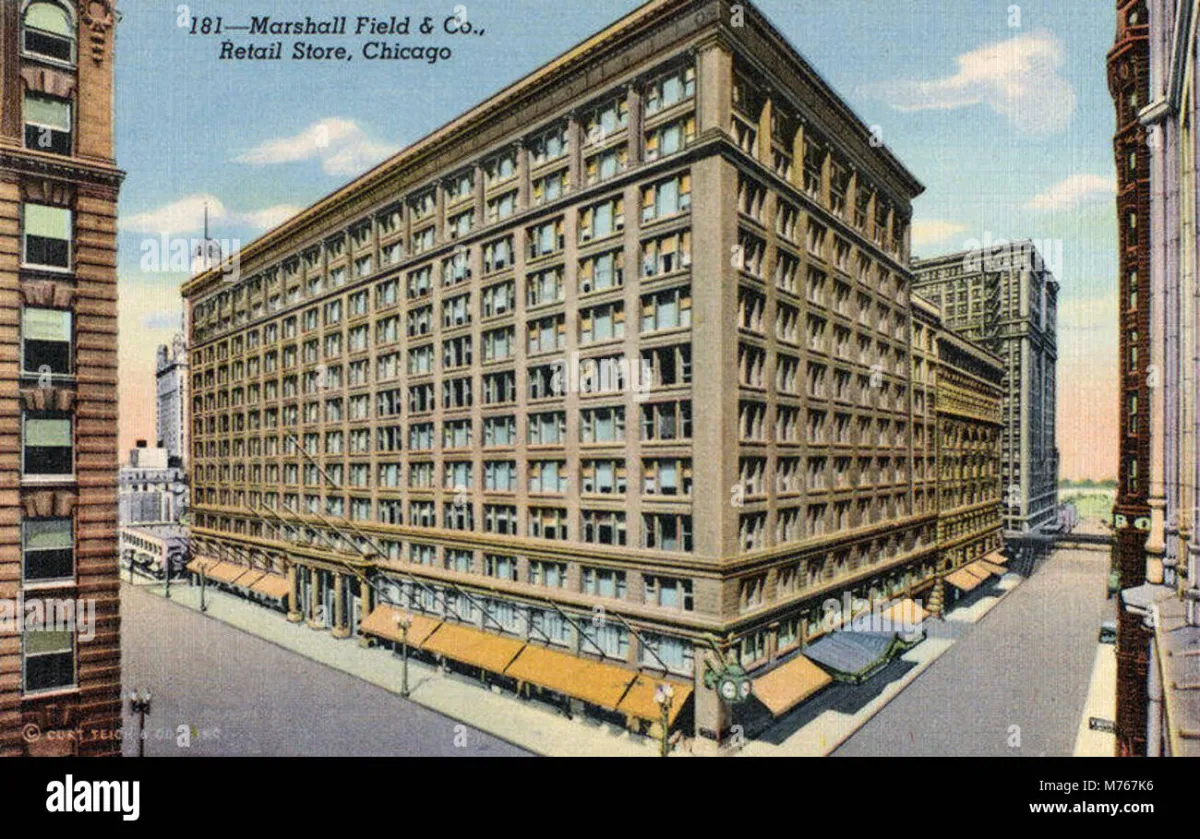 Photo: Marshall Field's, via c8.alamy.com
Even leisure carried a dress code. Bowling alleys had leagues where men wore collared shirts. Drive-in movie theaters saw women in blouses and skirts. A night at the roller rink meant something nicer than cutoffs. The underlying principle was consistent: being out in the world meant looking like you belonged in it.
The Airplane as Social Barometer
Nothing tracks the trajectory of American dress culture quite as clearly as air travel. In the early jet age — roughly the late 1950s through the early '70s — flying was aspirational. Tickets were expensive, the experience was genuinely glamorous, and passengers dressed to match the occasion. Airlines leaned into it, with uniforms, fine china, and service that treated every seat like first class.
As deregulation in 1978 opened aviation to mass-market pricing, the passenger pool broadened dramatically. Flying stopped being a luxury and became a utility — closer to a bus with wings than a social event. The dress code didn't officially change. It just quietly dissolved as the culture of flying shifted from exceptional to routine.
By the 1990s, comfort had become the dominant value. By the 2000s, the athleisure trend was erasing the last visible distinctions between what Americans wore at home and what they wore everywhere else. Today, the same outfit that works for the couch apparently works for the terminal, the restaurant, and occasionally the funeral.
Casual Friday and the Office Unraveling
The workplace tells a parallel story. For most of the postwar era, American office culture maintained strict dress standards. Men wore suits. Women wore professional attire. The uniform communicated seriousness, membership, and a shared understanding of what the professional world looked like.
Casual Friday crept in during the 1990s, initially as a Silicon Valley quirk that spread eastward. It was framed as a perk, a small loosening that boosted morale without costing anything. Then it became every Friday. Then it became the default. By the time remote work normalized during the pandemic, the concept of professional dress had become almost theoretical for large segments of the workforce.
None of this is inherently catastrophic. Comfort has real value. Dress codes were often exclusionary, enforced along lines of gender and class in ways that weren't always fair. The relaxation of those codes opened professional spaces to people who couldn't afford or didn't fit the traditional uniform.
But something was also quietly surrendered.
What the Clothes Were Actually Saying
Dress codes — formal and informal — were a form of social coordination. They communicated shared values about which moments deserved effort and which spaces deserved acknowledgment. When you put on your good clothes for church or a flight or a department store, you were participating in a collective agreement about what mattered.
The erosion of that agreement reflects a broader cultural shift toward individualism and comfort as supreme values. The implicit social contract that said we dress up because we're in public together gave way to a different logic: I wear what I want because my comfort is the priority.
Neither position is entirely wrong. But the shift came with a cost that's hard to quantify — a subtle flattening of public life, a loss of the visual markers that used to signal that some moments were genuinely different from others.
Then What Now
The Sunday best isn't coming back, and probably shouldn't — not in its most rigid form. But it's worth sitting with the question of what disappeared along with the dress code.
When every occasion looks the same, every occasion starts to feel the same. The flight, the funeral, the first date, the grocery run — all dressed identically, all treated with the same level of casual indifference. There's freedom in that. There's also a quiet loss of ceremony that nobody officially voted to retire.
We just stopped showing up dressed for the occasion. And eventually, the occasion stopped feeling like one.