Before the App, There Was a Knock at the Door: The Small Army That Once Kept American Homes Running
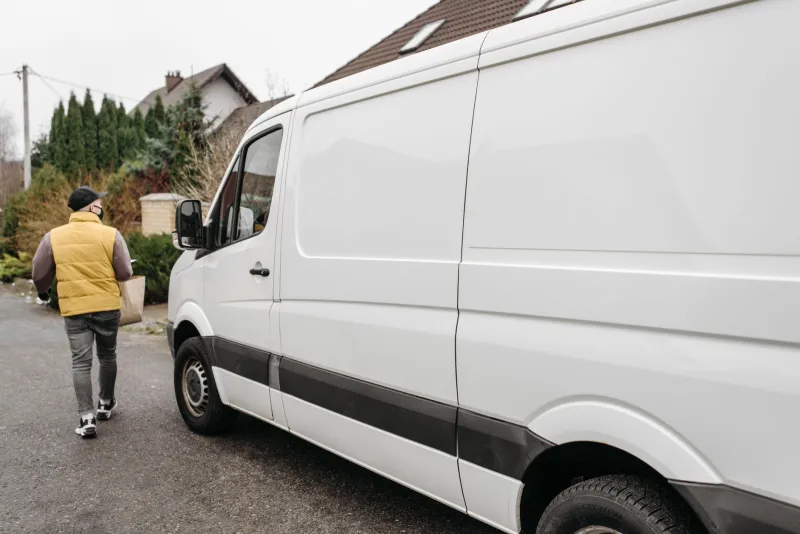
On a typical Tuesday morning in 1952, a household in suburban Ohio might be visited by three different people before 8 a.m. — none of them invited in the modern sense, all of them expected.
The milkman had already come and gone before the family woke up, leaving glass bottles on the back step in a wire carrier, picking up the empties from the day before. The breadman would arrive mid-morning, loaves stacked in a basket, occasionally a box of rolls if you'd left a note. By afternoon, the dry goods truck might make its weekly pass through the neighborhood, and if the icebox needed a fresh block — because not everyone had an electric refrigerator yet — the iceman would haul it up the back stairs without being asked, because he'd been doing it long enough to know your schedule.
This wasn't a convenience. It was infrastructure.
The Ecosystem Nobody Mapped
The network of home service workers that sustained mid-century American households was surprisingly complex. Milk delivery was the most universal — at its peak in the late 1940s, roughly half of all milk consumed in the United States was delivered directly to homes by local dairy routes. But that was just the beginning.
The Fuller Brush Man was a genuine cultural institution. Door-to-door salesmen carrying sample cases of cleaning supplies, brushes, and household goods made regular circuits through residential neighborhoods. They were expected, often welcomed, and sometimes the primary way rural and suburban households accessed products that hadn't yet reached local stores. The Avon Lady operated on similar logic, building customer relationships that lasted for years.
The knife sharpener worked the streets on a schedule neighborhoods learned to recognize — often announced by a distinctive bell or a particular call. The coal delivery man came seasonally. The insurance collector came weekly, collecting small premium payments door to door in an era before automatic bank drafts. The egg man, the vegetable truck, the fish seller on Fridays in Catholic neighborhoods — each one filling a slot in a commerce ecosystem built entirely on personal contact and reliable routine.
And then there was the encyclopedia salesman, whose visit was a genuine event. A man at the door with a leather case and a pitch that could last an hour, selling the promise of knowledge in thirty volumes. Families saved up for those sets. Kids did homework out of them for a decade.
What the Route Man Actually Was
The milkman is the figure most people remember, and for good reason. He wasn't just delivering dairy. He was an early-warning system.
Because route drivers came at the same time, to the same houses, day after day, they noticed things. An uncollected bottle on a step that was always cleared by 7 a.m. A light still on that was always dark. A note in the box that seemed distressed. Route men regularly checked on elderly customers, alerted families when something seemed off, and occasionally called for help when they found someone who'd fallen or taken ill overnight.
That wasn't in the job description. It was just what happened when the same person showed up at your house three hundred times a year.
The Fuller Brush Man played a similar role in a different register. In isolated rural communities and in neighborhoods where women were home alone during the day, these regular visitors provided a form of social contact that the modern world doesn't have a clean replacement for. They were familiar faces on a predictable schedule. Their arrival was a small event in a day that might not have many others.
The Supermarket Changed Everything First
It's tempting to credit Amazon or big-box retail with dismantling this ecosystem, but the real disruption happened much earlier. The postwar supermarket boom of the 1950s was the first major blow. As car ownership spread and suburban grocery chains expanded, the economics of home delivery shifted. Why pay a premium for milk delivered to your door when you were already driving past the A&P twice a week?
Refrigeration finished the job. Once electric refrigerators became standard household equipment — which happened rapidly through the 1950s — the daily or every-other-day delivery model became unnecessary. You could buy a week's worth of milk and store it. The iceman became irrelevant almost overnight as the appliance he'd been supplying was replaced by the one that made him obsolete.
By the 1970s, most residential delivery routes had collapsed or been absorbed into commercial distribution. The Fuller Brush Man hung on longer, but door-to-door sales declined steadily as retail expanded and cultural attitudes toward unannounced visitors shifted. The encyclopedia salesman survived into the 1990s, until the internet made the entire premise of physical reference volumes feel quaint.
The Convenience We Chose and What It Cost
The modern replacement for all of this is, in theory, better. Amazon delivers almost anything in two days. Instacart will bring your groceries in an hour. DoorDash handles dinner. Apps manage everything from prescription refills to dry cleaning pickup.
The goods arrive faster, cheaper, and with more variety than any route man could have offered. Nobody disputes the material improvement.
But the delivery driver who leaves a package at your door and drives away before you get there is not the milkman. He doesn't know your name. He doesn't notice if something seems wrong. He's fulfilling a transaction, not maintaining a relationship. The notification on your phone that says your order has been delivered is efficient in a way that the old system never was. It is also entirely impersonal in a way the old system never was either.
The mid-century home service economy was inefficient, redundant, and often more expensive per unit than buying in bulk at a store. It also meant that the average American household had regular, repeated contact with a small community of tradespeople who knew them as individuals. That contact wasn't incidental to the service. In many ways, it was the service.
Then What Now
The knife sharpener doesn't work your block anymore. The breadman stopped coming before your parents were born. The Fuller Brush Man retired and nobody replaced him.
What replaced all of them was a single app, a warehouse somewhere outside the city, and a stranger who leaves your package by the door without knocking. It's faster. It's cheaper. It works.
But somewhere in the gap between the old knock at the door and the quiet buzz of a delivery notification, an entire layer of human connection got optimized out of daily American life. We didn't lose it all at once. We traded it away, one convenience at a time, and called it progress. Which it was. Mostly.