The Doctor Who Remembered Everything: Medicine Before the Digital File
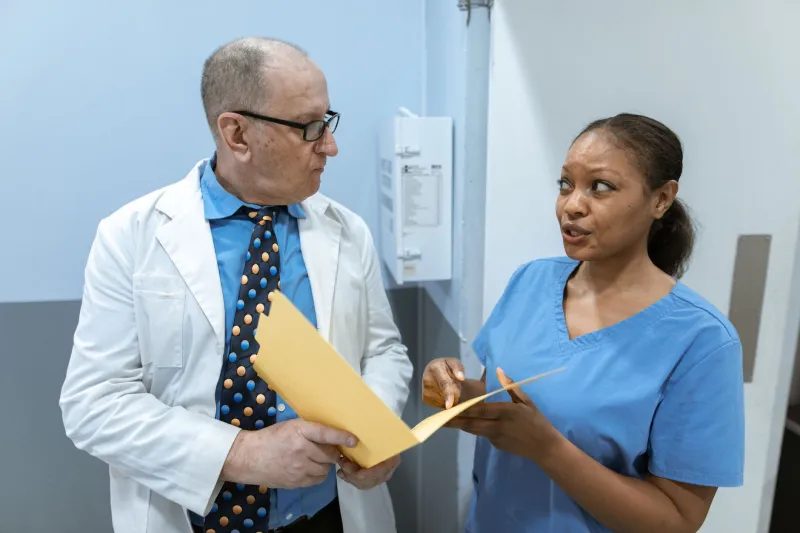
There's a particular kind of trust that builds over twenty years of appointments. The kind where a doctor doesn't need to scroll through a screen to remember that you had a bad reaction to penicillin in 1987, or that your father died of a heart attack at fifty-three, or that you tend to minimize symptoms when you're worried about something. They just know. They knew because they were there, and because they wrote it down in a manila folder that sat in a filing cabinet under your last name, and because you were a person to them rather than a record number.
For most of American history, that was how medical information worked. Informally, personally, and often imperfectly — but with a depth of context that no database has fully managed to replicate.
The Filing Cabinet as Life Story
Before electronic health records became the standard in the 2010s, most Americans' medical histories existed in one of three places: a paper file at their doctor's office, the memory of a physician who had treated them for years, or their own recollection of what had happened to them and when.
For patients lucky enough to have a long-term family doctor — the kind who delivered babies, treated the same families across generations, and stayed in one community for decades — this system worked surprisingly well. The doctor didn't just have your records. They had your story. They knew you had anxiety that spiked in winter. They remembered that your mother had the same knee trouble you were now describing. They understood, without being told, that a complaint you'd been sitting on for three months probably meant something serious, because that's just how you were.
The paper file was a supporting document. The real record was the relationship.
For patients who moved frequently, or who couldn't afford consistent care, or who lived in rural areas with limited access to the same provider — the system was far less reliable. Medical histories got lost between offices. Allergies were forgotten or never documented. Conditions went unconnected because no one had the full picture. The intimacy of the old model was real, but it was unevenly distributed.
What People Carried in Their Heads
In the absence of portable records, Americans became their own medical historians. People memorized their blood type, their vaccination records, the names and dosages of every medication they'd ever taken. They kept mental files on family health patterns — who had diabetes, who had cancer, what age the men in the family started having heart trouble.
Women, in particular, often became the unofficial medical archivists for entire families. They tracked children's immunization schedules, managed elderly parents' prescription lists, remembered which sibling had the rare reaction to anesthesia. This was invisible labor, rarely acknowledged, but medically significant.
When you showed up at a new doctor's office, you answered questions from memory. The intake form asked you to list previous surgeries, current medications, known allergies. If you couldn't remember the name of the medication you took for six months in 1994, that information was simply gone. The system depended heavily on patients being accurate, articulate, and present — which not everyone could be.
The Promise and the Reality of Digital Records
Electronic health records were supposed to solve all of this. And in measurable ways, they have. A patient who shows up unconscious at an emergency room in a city they've never visited can have their medication history pulled up in seconds. Drug interactions that might have gone unnoticed are flagged automatically. Test results don't get lost in a fax machine. The efficiency gains are real and, in emergency situations, genuinely life-saving.
But the transition created new problems that nobody fully anticipated.
For one thing, the digital record fragments easily. Americans today often have medical records spread across multiple providers, health systems, and insurance networks that don't communicate cleanly with each other. The promise of a unified, portable health history remains largely unfulfilled for millions of patients. What you told your cardiologist in Houston may not be visible to your new primary care doctor in Denver.
For another, the shift to digital documentation changed what happens inside the exam room. Studies have consistently shown that physicians now spend a significant portion of appointment time entering data into electronic systems — often with their back to the patient, eyes on a screen. The average primary care doctor spends nearly two hours on documentation for every hour of face-to-face patient care. The record has, in some ways, become more important than the conversation.
What Gets Lost When Context Disappears
The old model's greatest strength was also its greatest vulnerability: it lived in people. A doctor who knew you for thirty years held an irreplaceable understanding of your health that no file could fully capture. But when that doctor retired, or you moved, or they died, that understanding went with them.
What digital records offer is persistence and accessibility. What they struggle to capture is nuance. A chart can note that a patient is anxious. It can't convey the particular way that anxiety shows up, or how it's changed over fifteen years, or what it means in the context of everything else the doctor knows about that person's life.
The best healthcare has always existed at the intersection of data and relationship. The old system had too little data and, for the fortunate, a great deal of relationship. The current system has more data than ever — and often, a relationship that begins and ends in a forty-five-minute window.
Somewhere between the manila folder and the electronic dashboard is the kind of medicine most people actually want: thorough, efficient, and human enough to remember who you are.