When America Actually Stopped: The Forgotten World of Mandatory Sunday Rest
The Day America Stood Still
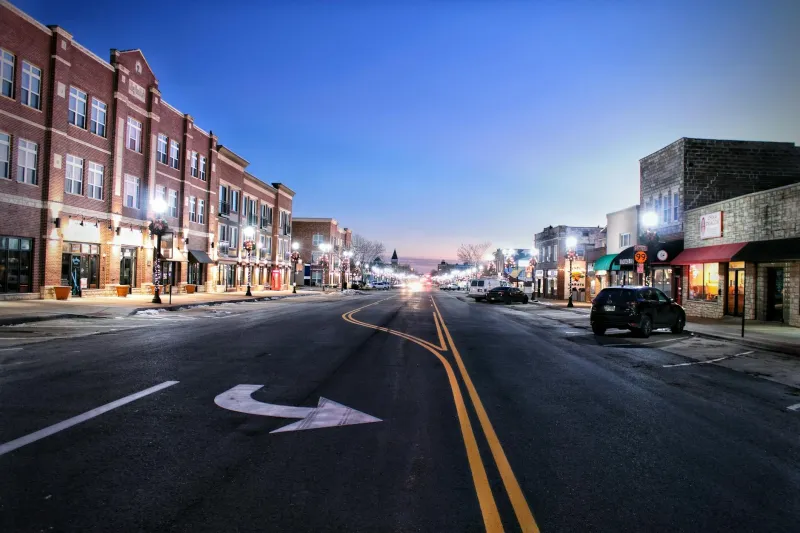
Imagine driving through your town on a Sunday and finding every store closed. Not just some stores — every store. No grocery shopping, no retail therapy, no errands. The mall parking lot empty except for tumbleweeds. Gas stations that might sell you fuel but nothing else. A entire day when commerce simply stopped.
This wasn't some dystopian fantasy. This was Sunday in America for most of the 20th century.
The Laws That Locked Up Commerce
Blue laws — named after the blue paper they were originally printed on — once regulated Sunday activities in nearly every American community. These weren't suggestions or traditions. They were actual laws with actual fines.
In most states, you couldn't:
- Buy alcohol (many states still maintain this one)
- Shop for clothes, furniture, or appliances
- Go to movie theaters or sporting events
- Even buy a car or get your hair cut
Some laws got absurdly specific. In Massachusetts, you could buy a fishing rod on Sunday, but not fishing bait. In Texas, you could purchase a bird cage, but not a bird to put in it. Connecticut allowed the sale of ice cream, but only if you ate it on the premises.
What Sunday Actually Looked Like
Without the option to shop, Americans had to find other ways to spend their Sundays. For many, this meant:
Family time by default: With nowhere else to go, families stayed home. Sunday dinner wasn't just tradition — it was often the only entertainment option.
Visiting neighbors: People actually dropped by each other's houses unannounced. Porches served as social hubs.
Reading and radio: Without television (and later, with limited Sunday programming), Americans read books, magazines, and listened to radio shows.
Nature and walking: Parks were packed. People took long walks simply because there was nothing else to do.
Church attendance: Even non-religious Americans often went to church because it was one of the few places open and offering community.
The Quiet Revolution
The most striking thing about Blue Law Sundays wasn't what happened — it was what didn't happen. The absence of commercial noise created a different kind of day entirely.
Streets were quieter. Families lingered over breakfast because there was no rush to get to the store before it closed. Children played outside longer because parents weren't shuttling between errands.
It was forced leisure, and for many Americans, it was the only leisure they got.
The Cracks in Sunday
The system started breaking down in the 1960s and 1970s for several reasons:
Economic pressure: Retailers realized they were losing massive revenue by staying closed one-seventh of the week.
Changing work patterns: As more Americans worked weekends in service industries, Sunday became their only day to shop.
Legal challenges: Courts began questioning whether laws rooted in Christian tradition violated the separation of church and state.
Cultural shifts: The counterculture movement rejected traditional authority, including laws that dictated how people should spend their time.
By the 1980s, most Blue Laws had been repealed or simply stopped being enforced.
The Sunday Shopping Revolution
Once the floodgates opened, Sunday quickly became one of the busiest shopping days of the week. Retailers discovered that people had been storing up their shopping desires all week and would spend freely on their one free day.
Today, Sunday generates some of the highest retail sales of any day. Malls are packed. Online shopping peaks. Amazon deliveries continue around the clock.
What We Traded Away
The shift from mandatory rest to optional shopping represented more than just economic change — it was a fundamental alteration in how Americans structure their time.
Shared rhythm: Blue Laws created a synchronized pause that everyone experienced together. Today, there's no shared downtime.
Forced family time: When there was literally nowhere else to go, families spent time together by default. Now family time has to compete with everything else.
Anticipation: When stores were closed, people had to plan ahead and wait for things. The instant gratification economy eliminated both the planning and the waiting.
Mental space: A day without commercial options created mental breathing room that's hard to find in our always-open world.
The Unintended Consequences
Removing Blue Laws solved some problems but created others:
Retail workers: Millions of Americans now work Sundays, often for lower wages and without choice.
Family stress: Parents spend Sundays catching up on errands instead of resting, making Monday feel like the continuation of a seven-day work week.
Consumer pressure: The option to shop anytime created the expectation to shop anytime.
The European Alternative
Interestingly, many European countries maintained their Sunday closure laws. In Germany, most stores still close on Sunday. France restricts Sunday shopping in many areas. These aren't backward societies — they're prosperous democracies that decided some things matter more than commerce.
Americans visiting Europe often comment on how strange it feels to encounter a day when you simply can't shop. But many also find it oddly liberating.
Then What Now?
Blue Laws represented government-mandated work-life balance at a scale that seems impossible today. The idea that society could simply agree to stop commerce for one day a week feels as antiquated as traveling by horse.
But maybe that's worth questioning. We gained the freedom to shop anytime, but we lost the freedom from shopping pressure. We eliminated forced rest and replaced it with optional rest — which, for many Americans, means no rest at all.
Our ancestors were legally required to slow down one day a week. We've made slowing down something you have to fight for.
Whether that represents progress probably depends on how exhausted you are.