When Your Word Was Worth More Than Gold: How America Built an Economy on Trust Alone
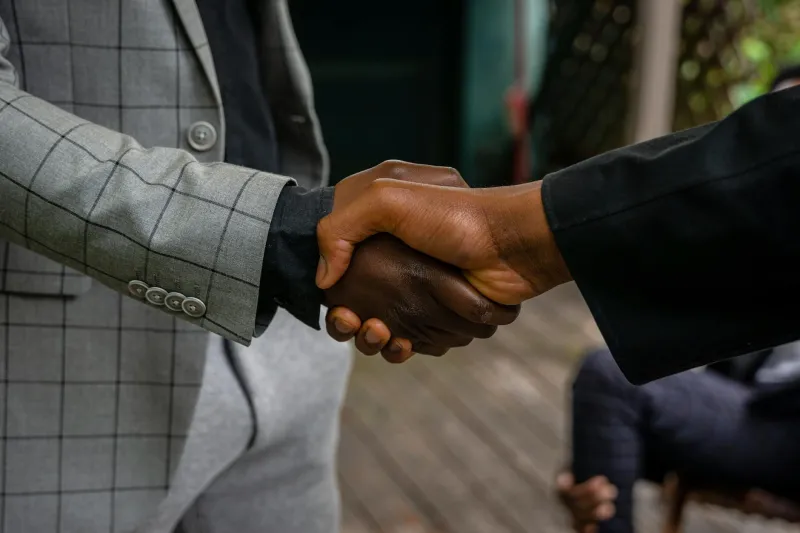
The Million-Dollar Handshake
In 1952, two cattle ranchers in Texas shook hands over the sale of 10,000 head of livestock. No contracts. No lawyers. No insurance policies. Just two men, their reputations, and a deal worth more than most people's houses. Six months later, when market prices shifted dramatically in the buyer's favor, he could have walked away and claimed the handshake never happened. Instead, he honored the agreement, drove to the seller's ranch, and paid in full.
This wasn't unusual. It was Tuesday in America.
Today, buying a cup of coffee requires agreeing to terms and conditions longer than the Constitution. But for most of the 20th century, American commerce operated on something far more powerful than legal documents: the unshakeable belief that a person's word was their bond.
When Character Was Collateral
Walk into any small-town hardware store before 1970, and you'd find something that would shock modern Americans: a credit system based entirely on knowing your customers. Store owners kept handwritten ledgers with running tabs for dozens of families. No credit scores. No background checks. No interest rates calculated to the third decimal point.
Harold Peterson ran Peterson's Hardware in Minnesota for forty-two years and never once required a signature for store credit. "I knew every customer's daddy and their daddy's daddy," he recalled in a 1985 interview. "If the Johnsons said they'd pay come harvest time, they paid come harvest time. Simple as that."
Peterson's system worked because reputation was currency. In a world where everyone knew everyone, breaking your word didn't just cost you money — it cost you your place in the community. The social contract was stronger than any legal one.
Banking on a Handshake
Even more remarkable were the informal lending networks that kept American families afloat. Before credit cards and payday loans, neighbors loaned neighbors money with nothing more than a promise to pay it back. These weren't small amounts either. Families regularly borrowed thousands of dollars — equivalent to tens of thousands today — to buy homes, start businesses, or weather financial storms.
In 1958, a young mechanic in Ohio borrowed $8,000 from his neighbor to open his own garage. No paperwork changed hands. The agreement was simple: pay it back when you can, with a little extra for the favor. The mechanic's business thrived, and he repaid the loan within three years, along with a bonus that his neighbor hadn't even requested.
Try explaining that transaction to a modern banker. They'd assume you were describing some elaborate money laundering scheme.
The Corporate Handshake
This trust-based system extended far beyond Main Street. Major corporations regularly sealed multimillion-dollar deals with nothing more than verbal agreements. The oil industry was particularly famous for this practice. Drilling rights, equipment purchases, and partnership agreements worth fortunes were routinely negotiated over dinner and finalized with a handshake.
J.R. Parten, a prominent Texas oilman, once closed a deal to sell his company for $50 million with just a handshake in a Houston restaurant. The paperwork took months to prepare, but both parties honored the verbal agreement despite significant market fluctuations that could have benefited either side.
"In those days, your reputation was worth more than your bank account," Parten later explained. "Break your word once, and you'd never do business in Texas again."
When Trust Became a Liability
So what changed? Why did America abandon this system of mutual trust for our current world of endless legal disclaimers and liability waivers?
The shift began in the 1960s and accelerated through the following decades. Several factors combined to erode the handshake culture: increased mobility broke down tight-knit communities, growing wealth created higher stakes for broken agreements, and an explosion in litigation made verbal contracts legally risky.
But perhaps most importantly, America simply got too big for trust to scale. The intimate networks that made handshake deals possible — where everyone knew everyone and reputation traveled fast — couldn't survive in an increasingly anonymous, mobile society.
The True Cost of Legal Protection
Today's system offers undeniable advantages. Written contracts provide clarity, legal protections prevent fraud, and regulatory oversight keeps markets stable. No one's suggesting we return to a world without consumer protections or business regulations.
But we've lost something profound in the transition. The average American now encounters dozens of legal agreements weekly — from software updates to grocery store receipts. We've become so accustomed to fine print that we barely notice we're signing our rights away with every click and swipe.
More importantly, we've lost faith in each other. The assumption that people will honor their commitments has been replaced by the assumption that they won't unless legally compelled to do so.
What We Traded Away
The handshake era wasn't perfect. Informal systems could exclude outsiders and lacked recourse for genuine disputes. But they fostered something our legalistic culture struggles to replicate: genuine accountability based on personal relationships rather than legal fear.
In a world where your word was your bond, people thought carefully before making commitments. Breaking a promise had immediate, personal consequences that no legal system could match. Today, we've gained legal protection but lost the social fabric that made protection unnecessary.
The next time you're asked to initial seventeen pages of terms and conditions to buy a sandwich, remember: there was a time when America ran on something much simpler, and infinitely more powerful, than the threat of lawsuits. It ran on the revolutionary idea that people meant what they said.