When Standing Still Was Perfectly Normal: How America Stopped Being Comfortable With Empty Time
The Last Generation to Know Real Waiting
Picture this: It's 1985, and you're sitting in your doctor's waiting room. There's no phone to check, no notifications to clear, no endless feed to scroll. You might flip through a six-month-old copy of People magazine, but mostly you just... sit. And think. Or don't think. You watch other people. You notice the wallpaper. You let your mind wander wherever it wants to go.
This wasn't considered torture. It was just Tuesday.
For most of American history, substantial chunks of every day were spent in what we'd now consider unbearable emptiness. Waiting for the bus. Standing in line at the bank. Sitting on the front porch after dinner. These weren't inconveniences to be optimized away — they were simply part of the rhythm of life.
The Numbers Tell the Story
Research from the University of Virginia found that the average American now experiences boredom for less than 30 minutes per day, compared to several hours just a generation ago. We've become so efficient at filling every moment that true idleness has practically vanished from daily experience.
Consider what disappeared: The 20-minute wait for film to be developed. The hour spent listening to the radio while dinner cooked. The long car rides where kids stared out windows instead of at screens. The Sunday afternoons when stores were closed and there was genuinely nothing to do.
Each of these empty spaces has been colonized by connectivity. We've traded waiting for scrolling, contemplation for consumption, and mental downtime for digital stimulation.
What Boredom Actually Did for Us
Neuroscientists have discovered that what we dismissed as "doing nothing" was actually when our brains did some of their most important work. During unstimulated periods, the brain's default mode network activates — the neural system responsible for self-reflection, memory consolidation, and creative problem-solving.
Dr. Manoush Zomorodi's research at WNYC found that people who deliberately introduced boredom back into their lives showed measurable increases in creativity and life satisfaction. The participants who spent time each day without stimulation generated more original ideas and reported feeling more connected to their own goals and values.
This makes sense when you consider what boredom forced previous generations to do. Without external entertainment, people had to generate their own mental activity. They daydreamed. They planned. They processed experiences and emotions. They got to know their own thoughts.
The Great American Fidget
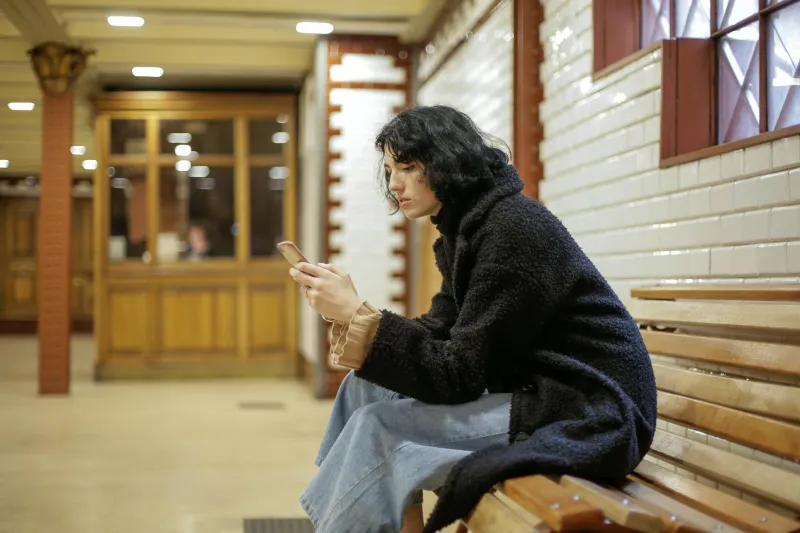
Watch people in any waiting room today, and you'll witness what researchers call "continuous partial attention" — the modern condition of never being fully present in any single moment. The average American checks their phone 96 times per day, creating a constant state of low-level stimulation that makes genuine boredom nearly impossible.
This isn't just about phones. We've redesigned entire environments to eliminate empty time. Elevators have screens. Gas pumps play videos. Grocery store checkout lines are optimized for speed. Even our cars now offer dozens of entertainment options for the brief moments between destinations.
The message is clear: Empty time is a problem to be solved, not a space to be inhabited.
What We Lost When Waiting Disappeared
Older Americans often describe a different relationship with time — one where waiting wasn't an emergency requiring immediate intervention. They remember long summer afternoons with nothing planned, winter evenings when the family simply sat together, and the particular quality of attention that emerged when there was nowhere else to be.
This wasn't about being less busy. People in previous decades worked hard and had full lives. But they also had regular encounters with unstimulated time that modern life has systematically eliminated.
The psychological impact goes deeper than nostalgia suggests. Studies show that people who can tolerate boredom demonstrate better impulse control, greater emotional regulation, and more resilience in facing challenges. The discomfort of empty time, it turns out, was building important mental muscles.
The Paradox of Infinite Entertainment
We now have access to more entertainment, information, and connection than any generation in human history. Yet rates of anxiety, depression, and attention disorders have skyrocketed. This isn't coincidental.
Constant stimulation creates what researchers call "hedonic adaptation" — we need increasingly intense experiences to feel engaged. The gentle pleasures that once filled empty moments — watching clouds, listening to neighborhood sounds, following a train of thought — can't compete with the engineered engagement of digital media.
We've optimized away the very experiences that helped previous generations develop patience, creativity, and self-awareness.
Then What Now?
The elimination of boredom from American life represents one of the most profound but invisible changes of the digital age. We've gained unprecedented access to information and entertainment, but lost something equally valuable: the ability to be comfortable with our own minds.
Previous generations didn't choose boredom — it was simply unavoidable. Now that we've made it optional, we're discovering that some discomforts serve important purposes. The empty moments we've worked so hard to eliminate were doing more than filling time. They were teaching us how to be human.
The question isn't whether we can return to 1985's waiting rooms, but whether we can find new ways to preserve spaces for genuine mental rest in a world designed to eliminate them. Because it turns out that learning to be bored might be one of the most important skills we never knew we needed.