The Corner Booth That Knew Your Order: When Restaurants Were Relationships, Not Algorithms
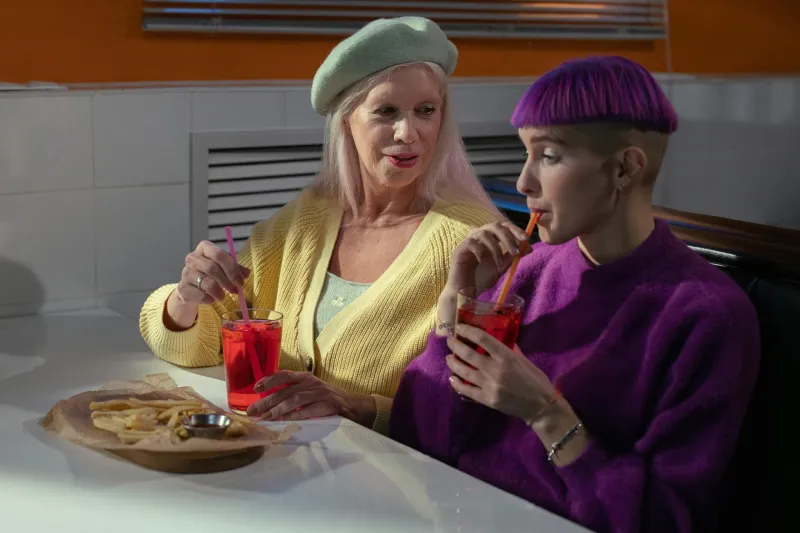
The Booth in the Back
Every Tuesday at 6:30 PM, Frank DiMarco would slide into the same red vinyl booth at Tony's Italian Kitchen. He didn't need to look at a menu — hadn't in fifteen years. Sal, the owner, would spot Frank through the kitchen window and start preparing his usual: chicken parmigiana, extra sauce, no cheese on the salad. Maria, who'd been waiting tables since Frank was in high school, would bring him black coffee without being asked and catch him up on her grandson's Little League season.
This wasn't fine dining. Tony's had wobbly tables, mismatched chairs, and a ceiling fan that squeaked. But Frank wasn't paying for atmosphere — he was paying for something money can't buy today: the feeling of being known.
Walk into most restaurants now, and you'll scan a QR code with your phone, browse a digital menu designed by corporate headquarters, and interact with a server who's been trained to recite the same enthusiastic script to every customer. Efficient? Absolutely. Personal? Not even close.
When Menus Were Suggestions
For most of the 20th century, American dining operated on an entirely different model. Restaurants weren't optimized experiences — they were extensions of someone's home, run by families who lived above the shop or in the apartment next door.
At Murphy's Diner in downtown Cleveland, the menu might list "Today's Special" without specifying what it actually was. Regular customers knew to ask what looked good, and Murphy himself would emerge from the kitchen to explain that he'd gotten beautiful fresh fish that morning, or that his wife had made her famous apple pie.
The relationship between customer and restaurant was exactly that — a relationship. Owners remembered your preferences, your family situations, your bad days and good ones. They'd slide you an extra piece of pie when you looked tired, or refuse to let you pay full price because "you've been coming here for twenty years."
The Algorithm of Hospitality
Today's restaurant industry has perfected the science of dining but lost the art of hospitality. Every interaction is measured, optimized, and standardized. Servers are trained to check on tables every twelve minutes, suggest appetizers within ninety seconds of seating, and upsell dessert with specific phrases that testing has proven most effective.
Customer relationship management software tracks your ordering history, dietary preferences, and spending patterns with algorithmic precision that would make old-school restaurant owners weep. But somehow, despite all this data, you still feel like a stranger every time you walk through the door.
The difference is profound. Mrs. Chen at Golden Dragon remembered that you always ordered hot and sour soup because she cared about you as a person. Today's restaurant knows you order hot and sour soup because it wants to sell you more soup.
The Neighborhood Institution
Mid-century American restaurants served a social function that extended far beyond feeding people. They were community centers, informal meeting halls, and local news exchanges. At Rosie's Coffee Shop, you'd learn about job openings, hear gossip about the mayor's latest scandal, and get updates on who was dating whom.
These establishments operated on what sociologists call "weak ties" — casual relationships that weren't intimate but were consistent and meaningful. Your waitress at the corner diner wasn't your best friend, but she was part of your daily routine, a familiar face in an increasingly anonymous world.
Restaurant owners took pride in knowing their customers' stories. They'd ask about your sick mother, remember your anniversary, and save your favorite table for special occasions. This wasn't marketing strategy — it was genuine human connection in a commercial setting.
The Corporate Takeover
The transformation began in earnest during the 1960s and 70s as chain restaurants discovered they could systematize hospitality. McDonald's led the charge with its assembly-line approach to food service, but the model quickly spread to sit-down establishments.
Applebee's, Chili's, and dozens of other chains perfected the formula: standardized menus, identical décor, and scripted service that could be replicated from coast to coast. A customer could walk into any location and receive exactly the same experience, whether they were in Maine or California.
This consistency was revolutionary and profitable. But it came at a cost that wasn't immediately apparent: the death of restaurant personality.
The Script Economy
Modern restaurant service follows scripts so detailed they would make actors jealous. Servers are trained to introduce themselves with their name, explain how the menu works, and suggest specific items using language that's been focus-group tested for maximum effectiveness.
"Hi, I'm Jennifer, and I'll be taking care of you tonight. Have you been here before? Great! Let me tell you about our signature appetizers..." The words might vary slightly, but the structure is identical from chain to chain, city to city.
This approach eliminates variables that might lead to poor service, but it also eliminates the possibility of genuine interaction. When every conversation follows a predetermined script, there's no room for the spontaneous moments that create memorable experiences.
The Technology Buffer
Digital ordering has added another layer of distance between restaurants and customers. QR code menus, tablet ordering systems, and app-based delivery have made dining more convenient but less human.
You can now order, pay, and receive your food without speaking to another person. Restaurants celebrate this efficiency, but something essential gets lost in translation. The brief conversations with servers, the recommendations based on personal knowledge, the sense of being welcomed into someone's space — all of it disappears behind the digital interface.
What the Data Doesn't Capture
Modern restaurants collect more information about their customers than ever before, but they're measuring the wrong things. They know exactly how long you waited for your appetizer and whether you ordered dessert, but they have no idea whether you felt welcomed, understood, or cared for.
The old-school restaurant owners couldn't tell you their average table turn time or customer acquisition cost, but they knew something more valuable: how to make people feel at home. They understood that dining out was about more than consuming food — it was about being part of a community.
The Resistance Movement
Some restaurants are fighting back against the corporatization of dining. Independent establishments are emphasizing personality over efficiency, training servers to have genuine conversations rather than deliver sales pitches.
Restaurants like Prune in New York City or Zuni Café in San Francisco have built loyal followings by treating customers like individuals rather than data points. Their servers know regulars' names, preferences, and life stories. They're willing to modify dishes, save favorite tables, and create the kind of personal connections that chain restaurants can't replicate.
These establishments prove that the old model isn't obsolete — it's just been overshadowed by the pursuit of scalability and profit margins.
The Price of Efficiency
The modern restaurant industry's obsession with efficiency has created dining experiences that are faster, more consistent, and more profitable than anything previous generations could imagine. But efficiency and hospitality often work at cross-purposes.
Real hospitality takes time. It requires getting to know people, remembering their preferences, and treating them as individuals rather than transactions. It's inherently inefficient, which makes it incompatible with quarterly profit targets and franchise expansion plans.
The Memory Palace
What we've lost isn't just personal service — it's the role restaurants once played in creating and preserving community memory. When Sal's grandson took over Tony's Italian Kitchen, he inherited not just recipes and equipment but decades of customer relationships and neighborhood history.
Today's restaurant workers are often transient, moving between establishments as opportunities arise. They don't have time to build relationships with customers, and even if they did, corporate policies often discourage the kind of personal interactions that once defined dining out.
Dining in the Age of Optimization
The question isn't whether today's restaurants are objectively better or worse than their predecessors. In many ways, they're superior: cleaner, safer, more diverse, and more accommodating to dietary restrictions.
But something irreplaceable was sacrificed in the name of progress. We gained consistency and lost personality. We perfected service and forgot hospitality. We optimized the dining experience so thoroughly that we optimized away the very thing that made eating out special in the first place.
The corner booth where everyone knew your name wasn't just a place to eat — it was proof that in an increasingly anonymous world, you still mattered to someone. That might not show up in customer satisfaction surveys, but its absence is felt in ways we're only beginning to understand.