When Getting Lost Was the Best Part of the Trip: The Unplanned Adventures That Shaped American Road Culture

Pull over at any rest stop on Interstate 40 and you'll find them — travelers hunched over their phones, fingers swiping through navigation apps, frustrated that they've somehow strayed three minutes from their optimal route. What you won't find anymore are the accidental discoveries that once made American road trips legendary: the family diner hidden behind a grain elevator, the roadside attraction that existed only because someone took a wrong turn, the conversations with strangers that happened because you needed directions.
Getting lost used to be an art form. More than that, it was often the point.
When Maps Were Suggestions, Not Commands
In 1975, planning a cross-country drive meant spreading a paper atlas across your kitchen table and tracing a route with your finger. But that route was just a suggestion. Once you hit the road, real life took over. Construction detours sent you through towns that weren't on any tourism board's radar. A missed exit became an excuse to explore a state highway that meandered through farm country instead of bypassing it at 80 mph.
The difference wasn't just technological — it was philosophical. Getting lost meant discovering America the way it actually existed, not the sanitized version curated by algorithms. When you couldn't instantly locate the nearest Subway, you ended up at Mabel's Truck Stop, where the coffee was strong, the pie was homemade, and the locals had stories that couldn't be found on Yelp.
American families built entire vacation traditions around planned wandering. Parents would deliberately choose the scenic route, knowing it might add hours to the trip but also knowing those hours often contained the memories that lasted longest. Kids learned to read landscapes instead of screens, spotting storm clouds on the horizon or figuring out which direction was west by watching the sun.
The Serendipity Economy
Before smartphones killed spontaneity, entire businesses thrived on travelers who were genuinely lost. Tourist traps weren't traps — they were lifelines for drivers who had no idea where they were going next. The World's Largest Ball of Twine in Kansas existed because people still took highways instead of interstates, still stopped when something looked interesting instead of consulting reviews first.
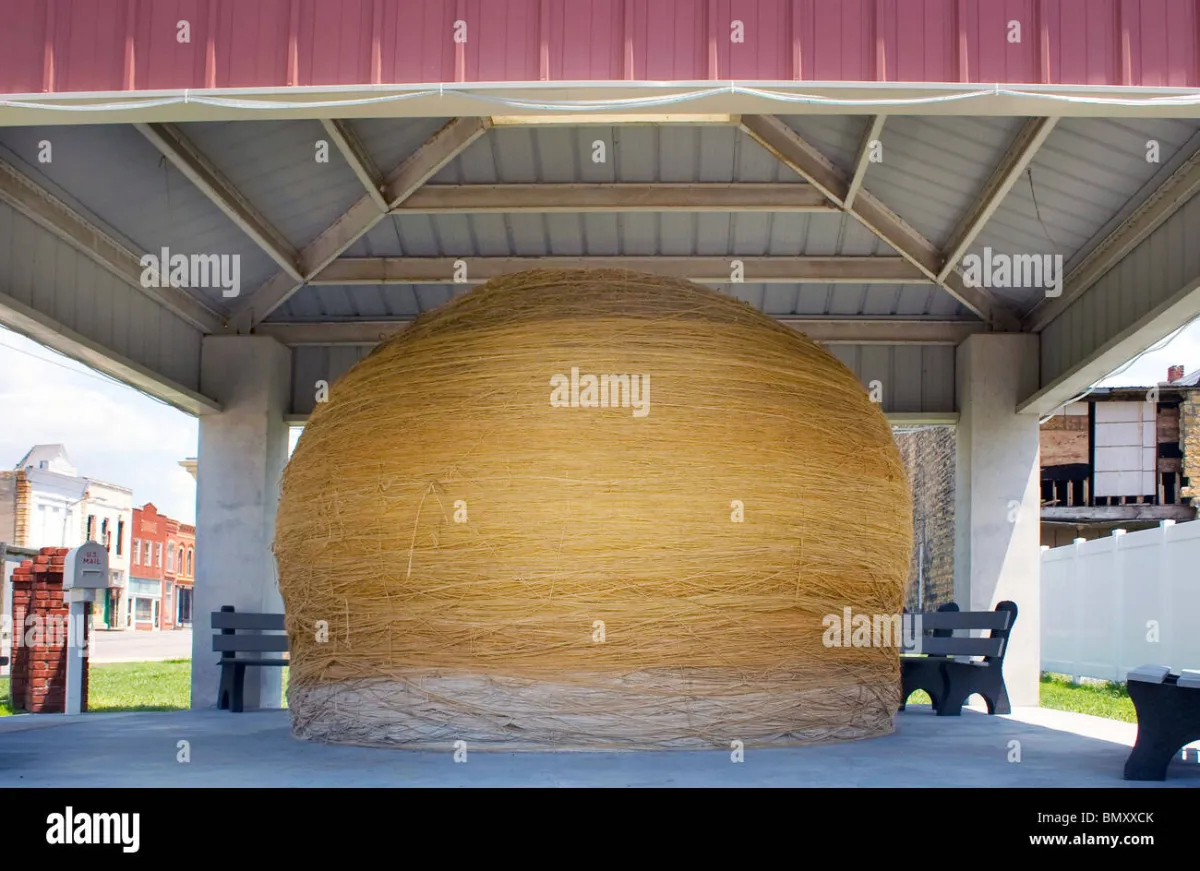 Photo: World's Largest Ball of Twine in Kansas, via c8.alamy.com
Roadside diners built their customer base on geographic accidents. When you couldn't Google "best breakfast near me," you stopped wherever looked decent and hoped for the best. Sometimes you got terrible food and surly service. But sometimes you discovered a place where the waitress called you "hon," the cook came out to chat, and the regulars treated you like temporary family.
Motels competed for the business of travelers who couldn't book rooms in advance because they didn't know where they'd end up sleeping. The neon signs that still dot old highway routes weren't just advertising — they were beacons for people who were genuinely making it up as they went along.
When Wrong Turns Created Right Stories
Talk to anyone who took road trips in the pre-GPS era and they'll tell you the same thing: their best travel stories started with getting lost. The family that discovered a hidden hot spring because Dad refused to ask for directions. The couple who found their favorite restaurant because Mom misread the map. The teenagers who ended up at a county fair in Nebraska because they took the wrong exit and decided to see where it led.
These weren't just happy accidents — they were the inevitable result of a travel culture that embraced uncertainty. When you couldn't predict exactly where you'd be at every moment, you had to stay open to possibilities. When you couldn't instantly solve every navigation problem with your phone, you had to talk to strangers, read your environment, and make decisions with incomplete information.
The conversations alone were worth the extra mileage. Stopping at a gas station for directions meant talking to locals who might recommend their brother's barbecue joint or warn you about construction ahead. These interactions weren't efficient, but they were human in ways that voice-guided navigation could never replicate.
The Death of Productive Wandering
Today's GPS doesn't just provide directions — it eliminates the possibility of genuine discovery. When your phone knows exactly where you are, where you're going, and the fastest way to get there, there's no room for serendipity. The algorithm has already decided which route is optimal, which businesses deserve your attention, and which detours are worth taking.
Modern travelers don't get lost; they get "rerouted." The difference is profound. Rerouting is a temporary inconvenience that technology quickly fixes. Getting lost was an opportunity that required human creativity to resolve.
We've gained efficiency and lost magic. Today's road trips are faster, more predictable, and infinitely more boring. We arrive at our destinations having seen exactly what we expected to see, having stopped only where algorithms suggested we stop, having missed every surprise that wasn't already catalogued in someone's database.
What We Found When We Didn't Know Where We Were Going
The death of getting lost represents more than just a change in travel habits — it's the end of one of America's last remaining spaces for genuine adventure. When every journey became optimized, we stopped discovering the America that exists between the destinations, the places that survive not because they're highly rated but because they're genuinely local.
Getting lost taught Americans skills that no app can replicate: how to read the landscape, how to talk to strangers, how to make decisions without perfect information. It created a culture of travelers who were comfortable with uncertainty and excited by the possibility of unplanned discovery.
Now we navigate life the same way we navigate highways — efficiently, predictably, and without much room for surprise. We've gained the ability to get anywhere quickly, but we've lost the art of not knowing where we're going and being perfectly fine with that. In a world where every journey has become a straight line, we've forgotten that the best stories usually happen along the curves.