When Flying Was a Black-Tie Event: The Vanished Glamour of the Jet Age
When Flying Was a Black-Tie Event: The Vanished Glamour of the Jet Age
There's a photograph that captures it perfectly. A Pan Am cabin from 1962: white-gloved flight attendants, passengers in suits and pearls, tables set with actual silverware, and enough legroom to stretch out and read a newspaper in comfort. It looks less like a plane and more like a private dining club that happened to be traveling at 35,000 feet.
That world is gone. And most of us have no idea how completely it disappeared — or what it actually cost to be part of it.
Flying Was Not for Regular People
When commercial jet aviation took off in the late 1950s, a round-trip ticket between New York and Los Angeles on a major carrier like TWA or Pan Am could run anywhere from $400 to $600. That sounds almost reasonable until you adjust for inflation: in today's dollars, that same ticket would cost somewhere between $4,000 and $6,000. For a single round trip.
To put that in human terms, the average American household income in 1960 was roughly $5,600 a year. Flying coast to coast and back wasn't a weekend getaway — it was a significant financial commitment that most working families simply couldn't make. Air travel was, without question, a luxury product for a luxury market.
And the airlines knew it. They designed every inch of the experience accordingly.
The Onboard Experience Was Genuinely Extraordinary
First-class cabins in the early jet era weren't just roomier versions of what came behind them. They were a different category of experience entirely. Passengers on Pan Am's flagship routes were served lobster thermidor and chateaubriand carved tableside. Wine lists rivaled what you'd find at a decent Manhattan restaurant. Seats converted into sleeping berths on overnight transatlantic flights. Some aircraft featured piano lounges and cocktail bars where passengers could mingle mid-flight.
Even economy class — which existed by the late 1950s as carriers tried to grow their market — bore almost no resemblance to what that term means today. Seats were wider, meals were included as a matter of course, and the cabin crew ratio meant you were actually attended to rather than managed.
Flight attendants, then called stewardesses, were required to have nursing degrees at some carriers. The emphasis was on genuine hospitality, not just getting everyone safely from point A to point B.
The Shift That Changed Everything
The transformation began in 1978, when the Airline Deregulation Act dismantled the federal system that had controlled ticket prices and routes since the 1930s. Before deregulation, the Civil Aeronautics Board set fares across the industry — which kept prices high, service standards elevated, and the flying public relatively select.
After deregulation, competition exploded. New carriers entered the market. Price wars broke out. Airlines that couldn't compete on cost went under or merged. The ones that survived figured out the economics of volume: fill more seats, charge less per seat, cut everything that doesn't generate revenue.
By the 1980s, complimentary meals were already shrinking. By the 1990s, legroom was quietly disappearing as carriers added rows to existing aircraft. By the 2000s, checked baggage fees had arrived. Today, some budget carriers charge extra to pick your seat, bring a carry-on, or print your boarding pass at the airport.
The Tradeoff Nobody Talks About
Here's the thing: deregulation worked, in the most literal sense. It did exactly what its architects intended. A domestic flight that cost the equivalent of $5,000 in 1960 can now be booked for $200 on a slow Tuesday. Flying went from being a privilege of the upper class to something a college student can do on a whim. Hundreds of millions of people travel by air every year who simply couldn't have afforded to in 1962.
That's a genuine, meaningful democratization of movement. It's hard to argue against it.
But the cost — beyond the ticket price — is harder to quantify. Flying used to feel like an event. People dressed for it. They arrived early not because security lines were long, but because the terminal itself was worth experiencing. Airports like Eero Saarinen's TWA Flight Center at JFK were temples to the idea that travel was something worth celebrating.
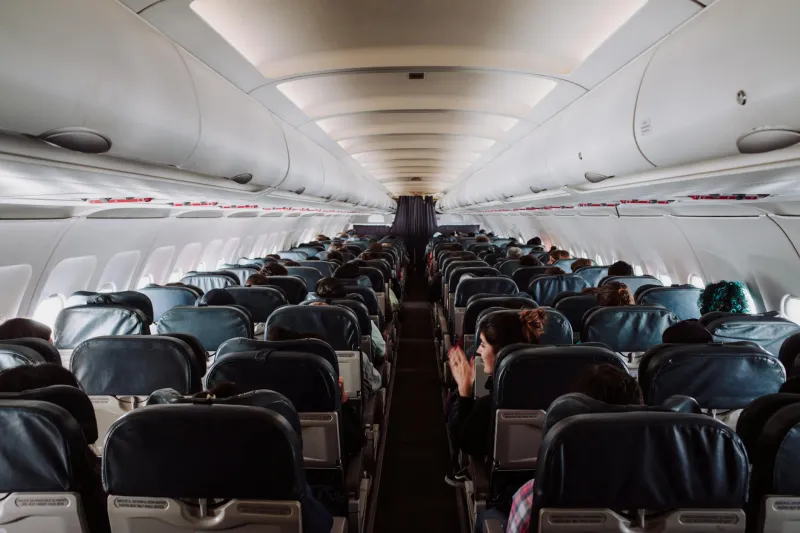
Now the experience of flying is, for most people, something to be endured. You squeeze into a seat designed to accommodate a person slightly smaller than you, pay $14 for a beer, and count the minutes until landing.
Then What Now?
It's worth sitting with the paradox for a moment. The golden age of aviation was golden almost entirely for wealthy people. The glamour was real, but it was also exclusionary in ways we shouldn't romanticize too heavily.
At the same time, there's something genuinely lost when an experience that once carried a sense of occasion becomes indistinguishable from riding a bus — except louder, more expensive, and with worse snacks.
The jet age promised a future where the world would feel smaller and more reachable. It delivered on that promise completely. What nobody mentioned was that in making the journey accessible to everyone, we'd also make it feel like it wasn't worth taking.