After School Used to Mean Freedom: How American Kids Became Tiny Executives
The 3:15 Bell That Actually Meant Something
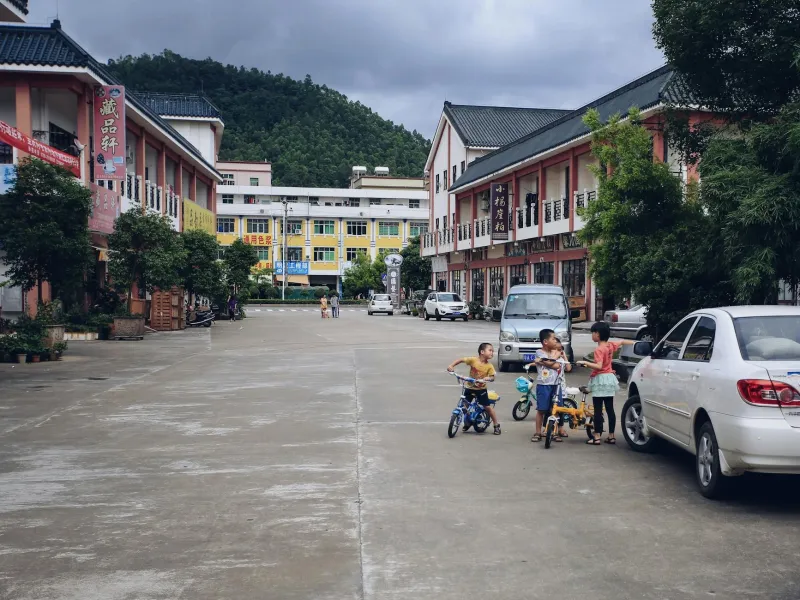
Picture this: It's 1963, and the school bell rings at Lincoln Elementary in suburban Ohio. Eight-year-old Tommy Henderson grabs his lunch box, waves goodbye to his teacher, and walks the six blocks home without a care in the world. His afternoon? Maybe building a fort in the vacant lot behind his house, riding his bike until dinnertime, or simply lying in the grass watching clouds drift by.
Tommy's backpack — if he even had one — contained maybe a reading book and a broken pencil. Homework? What homework? His teacher, Mrs. Patterson, believed children needed time to be children. School was for learning, home was for living.
Fast-forward sixty years, and Tommy's grandson Jake faces a completely different reality. His backpack weighs fifteen pounds and contains homework assignments for five different subjects, three permission slips that need signing, and a detailed schedule of after-school activities that would make a CEO weep. Jake's afternoon is planned down to the minute: soccer practice at 4:00, math tutoring at 5:30, dinner at 6:45, homework until bedtime.
Somewhere between then and now, American childhood became a full-time job.
When Learning Stayed at School
The transformation didn't happen overnight, but the statistics are staggering. In 1981, the average elementary school student spent about 44 minutes per week on homework. By 2016, that number had nearly tripled to over two hours weekly for the same age group. High school students now average more than 17 hours of homework per week — equivalent to a part-time job.
This shift represents more than just academic intensification. It reflects a fundamental change in how American society views childhood itself.
Dr. Etta Kralovec, author of "The End of Homework," points to the 1983 report "A Nation at Risk" as a turning point. The report warned that American students were falling behind internationally, triggering a panic that transformed schools into academic pressure cookers. "We essentially decided that childhood was a luxury we couldn't afford," Kralovec explains.
The Afternoon That Disappeared
To understand what we've lost, consider a typical Tuesday afternoon in 1965 versus today.
1965: The Unscheduled Life Three-thirty arrives, and kids pour out of Roosevelt Elementary like water from a broken dam. Some head straight home for milk and cookies. Others gather in the schoolyard for an impromptu game of kickball that might last ten minutes or three hours, depending on who shows up and how much fun they're having.
Seven-year-old Susan walks to the corner store with a quarter to buy penny candy, making crucial decisions about whether Swedish fish are worth twice as much as Tootsie Rolls. Her biggest worry is whether she can make it home before her mother starts wondering where she is.
No phones track her location. No structured activities await. No homework assignments loom. Susan's afternoon belongs entirely to her own imagination and curiosity.
2024: The Optimized Childhood Three-fifteen arrives, and kids are collected by parents checking their phones for traffic updates to the next scheduled activity. Seven-year-old Madison slides into the backseat of her mother's SUV, immediately pulling out a folder thick with worksheets.
"Did you finish your math problems?" her mother asks, navigating traffic to get to gymnastics on time. Madison has forty-five minutes to complete two pages of addition problems, practice her spelling words, and review her science vocabulary before tumbling practice begins.
After gymnastics comes dinner in the car, then home for reading logs, math homework, and a science project due Friday. Madison's day won't end until 8:30 PM, when she finally closes her workbooks and prepares for tomorrow's equally packed schedule.
The Anxiety Engine
This transformation hasn't just changed how children spend their time — it's changed who they are. Anxiety disorders among children have skyrocketed, with some studies suggesting that today's average child reports higher anxiety levels than psychiatric patients did in the 1950s.
Pediatrician and author Dr. William Sears calls it "the hurried child syndrome." Children who once had hours to process their thoughts and emotions through unstructured play now live in a constant state of performance anxiety. Every moment becomes an opportunity for improvement, optimization, or skill-building.
"We've forgotten that boredom is actually productive," explains Dr. Teresa Belton, a researcher at the University of East Anglia who studies creativity and child development. "When children have nothing to do, they develop internal resources. They learn to entertain themselves, to think independently, to solve problems creatively."
The Global Competition Panic
Much of this change stems from America's growing awareness of international academic competition. When news broke that students in Finland, Singapore, and South Korea were outperforming Americans on standardized tests, the response was swift and dramatic: more homework, longer school days, and earlier academic pressure.
But here's the irony: many of the countries Americans sought to emulate are now moving in the opposite direction. Finland, consistently ranked among the world's top educational performers, gives minimal homework to young students and emphasizes play-based learning. South Korean educators, alarmed by rising suicide rates among students, are actively working to reduce academic pressure.
Meanwhile, American children are working harder than ever, with diminishing returns on their investment.
The Lost Art of Nothing
What exactly did children do with all that free time in the 1960s? The answer might surprise modern parents: mostly nothing, and that was the point.
They built elaborate imaginary worlds in their backyards. They discovered which rocks skipped best across the pond. They learned to negotiate with friends, resolve conflicts without adult intervention, and entertain themselves without screens or structured activities.
Child psychologist Dr. Peter Gray argues that this unstructured play was actually sophisticated learning. "Free play is how children learn to make decisions, solve problems, exert self-control, and follow rules," he writes. "It's also how they learn to get along with others as equals rather than as subordinates to adults."
The Parent Trap
Today's parents often feel trapped by expectations they didn't create. Many remember their own childhood afternoons of freedom and wish they could give their children the same experience. But they also fear that stepping off the achievement treadmill will disadvantage their kids in an increasingly competitive world.
This creates what sociologist Annette Lareau calls "concerted cultivation" — a parenting style that treats childhood as a series of opportunities for skill development rather than a unique life stage worth protecting.
The result is families that feel perpetually busy but rarely satisfied, children who excel at following instructions but struggle with independent thinking, and a generation that has forgotten how to be alone with their thoughts.
The Way Back
Some schools and communities are beginning to push back against the homework arms race. Districts in California, Connecticut, and other states have implemented "homework-free" policies for elementary students. Some high schools have adopted "homework-free weekends" to give students time to recharge.
Parents are forming groups to resist the pressure for constant enrichment activities. "Let Grow," a nonprofit founded by Lenore Skenazy, encourages families to give children more independence and unstructured time.
These efforts face significant resistance from parents who worry their children will fall behind, teachers who feel pressure to show measurable progress, and a culture that has forgotten the value of childhood for its own sake.
Reclaiming the Afternoon
The children of the 1960s didn't grow up to be lazy or unsuccessful. Many became the entrepreneurs, innovators, and leaders who built the modern economy. They learned crucial life skills not from worksheets but from figuring out how to spend long summer afternoons.
Reclaiming that kind of childhood doesn't require abandoning academic achievement. It requires remembering that children are not tiny adults in training — they're human beings with their own developmental needs, including the need for rest, play, and time to simply exist.
The question isn't whether today's children are learning more than their grandparents did. It's whether they're learning the right things, and whether we've optimized childhood so efficiently that we've forgotten what childhood is actually for.
Sometime between then and now, we decided that a busy child was a successful child. We might want to reconsider that assumption before it's too late.