The Six-Day Journey That Once Made America Feel Conquerable
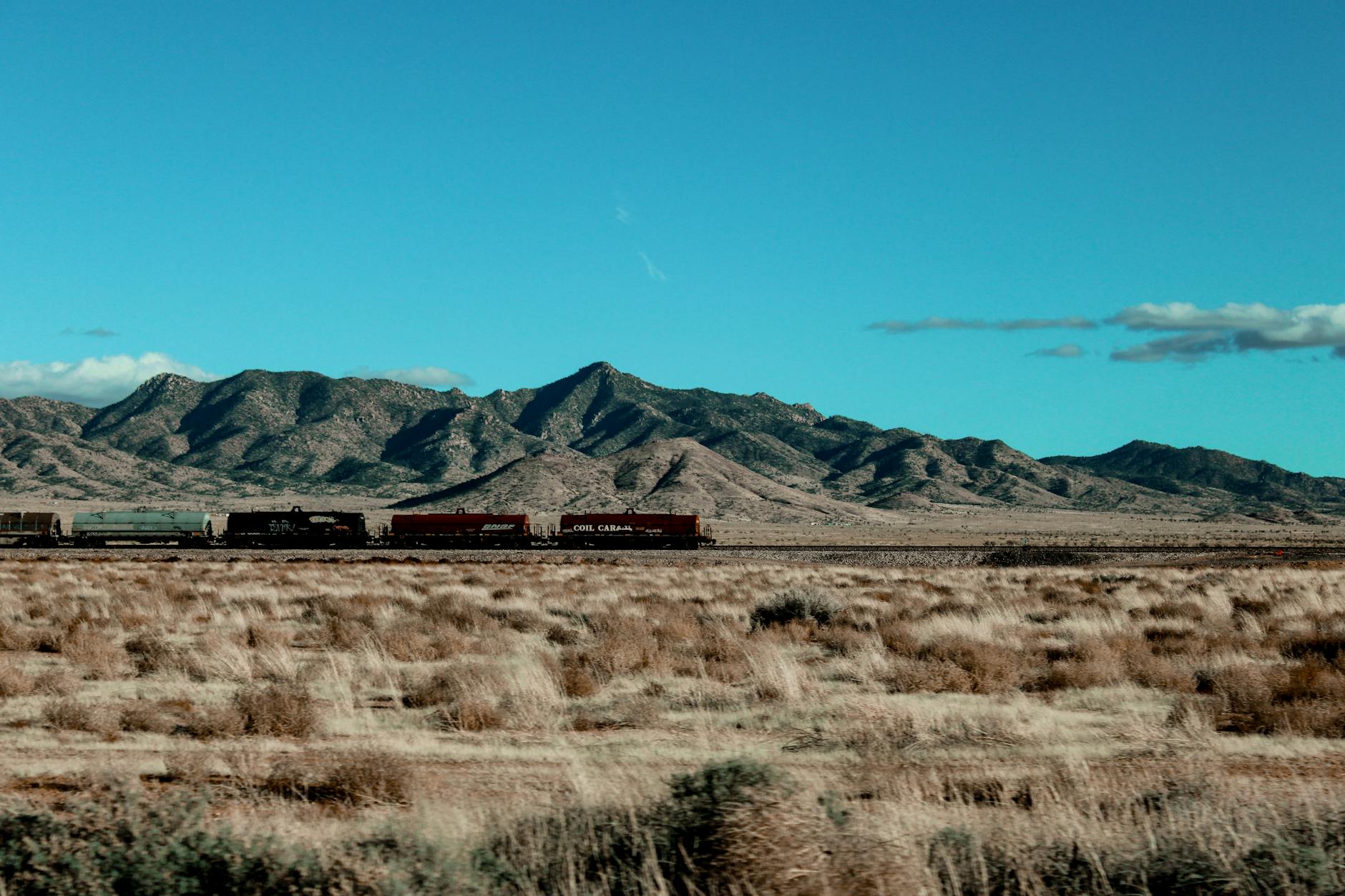
The Six-Day Journey That Once Made America Feel Conquerable
There's a moment, somewhere over Kansas at 35,000 feet, when the flight attendant hands you a tiny bag of pretzels and you look out the window at the flat brown nothing below and think: we're basically teleporting. New York to Los Angeles in five hours and change. You board in one world and step off in another, and the 2,800 miles in between barely register.
That compression of distance is so normal to us now that it takes a real mental effort to appreciate just how radical it is. Because not so long ago — within the lifetime of your grandparents — crossing this country was a six-day undertaking. And people called it fast.
The Iron Road Across a Continent
The transcontinental railroad was completed in 1869, and for decades it represented the most ambitious feat of engineering in American history. By the early 20th century, the rail network had matured into something genuinely impressive: a web of competing lines offering scheduled service between the coasts with names that still carry a kind of romance — the California Zephyr, the 20th Century Limited, the Super Chief, the City of Los Angeles.
The flagship transcontinental routes ran roughly six days from Chicago to the West Coast — and that was after improvements had already slashed the journey from the ten-plus days it took in the 1870s. The City of Los Angeles, launched by Union Pacific in 1936, completed the Chicago-to-LA run in just under 40 hours, which was considered breathtaking. Most coast-to-coast journeys, incorporating eastern connections, still clocked in around five to six days total.
And passengers didn't just tolerate that timeline. They planned around it. They looked forward to it.
What the Trip Actually Looked Like
This is where the contrast with modern travel gets genuinely interesting — and a little humbling.
First-class passengers on the great transcontinental trains weren't roughing it. They were living. Pullman sleeping cars offered private berths with crisp linen, fold-down beds, and a porter assigned to your car. Dining cars served multi-course meals prepared in onboard kitchens — real food, on real china, with tablecloths, as the Rockies rolled past the window. There were observation cars with curved glass domes specifically designed so passengers could watch the landscape unfold above and around them.
The Super Chief, which ran between Chicago and Los Angeles, became famous for its clientele — Hollywood stars, studio executives, politicians — who chose it not out of necessity but because the experience was genuinely pleasurable. Cary Grant took it. So did Judy Garland. The train had a barbershop, a cocktail lounge, and a menu developed in collaboration with Fred Harvey, the legendary restaurateur who had spent decades feeding travelers across the American West.
Stops along the way weren't inconveniences — they were part of the journey. Albuquerque. Flagstaff. Las Vegas (New Mexico, not Nevada). Passengers stretched their legs, bought local crafts, ate regional food. The trip was porous in a way that modern air travel fundamentally is not. You didn't just arrive somewhere; you moved through the country.
The Shift Nobody Fully Appreciated Until It Was Over
Commercial aviation existed before World War II, but it was expensive, limited, and frankly terrifying by modern standards. The real disruption came in the late 1950s with the introduction of the Boeing 707 and the rapid expansion of jet service. Suddenly, a coast-to-coast flight dropped to around five hours. Fares fell as competition increased. The Interstate Highway System, signed into law in 1956, also began pulling travelers into cars for medium-distance trips.
The railroads tried to compete — and failed. Passenger numbers collapsed through the 1960s. By 1971, the federal government created Amtrak specifically to absorb the dying passenger rail operations that private companies could no longer sustain. The golden age was over.
What was lost wasn't just time. It was a particular relationship with the scale of the country.
When you spend six days crossing the United States by train, you develop a felt sense of how large this place is. You watch the terrain shift from the green density of the East Coast to the flat agricultural heartland to the alien drama of the desert Southwest to the Pacific coastal ranges. You understand, in your body, that this is a continent. That the people in Flagstaff live in a genuinely different world from the people in Philadelphia.
A five-hour flight compresses all of that into a nap and a bag of pretzels.
Then What Now?
Amtrak still runs transcontinental routes — the California Zephyr from Chicago to San Francisco remains one of the most scenic train journeys in the world, and plenty of travelers choose it deliberately for exactly that reason. The journey takes about 52 hours. It is, by any historical standard, incredibly fast.
But it's no longer the primary way Americans experience distance. We've traded immersion for efficiency, and most of the time that's a trade we're happy with. A five-hour flight is a miracle of engineering and logistics that would have seemed like science fiction to the passengers boarding the Super Chief in 1938.
The question is whether we've lost something in the compression — some texture of experience, some understanding of the country we live in — that we haven't fully accounted for.
Six days used to feel fast. Now it just feels like a different kind of trip.