The Doctor Who Knew Your Name: When American Healthcare Was a Neighborhood Affair
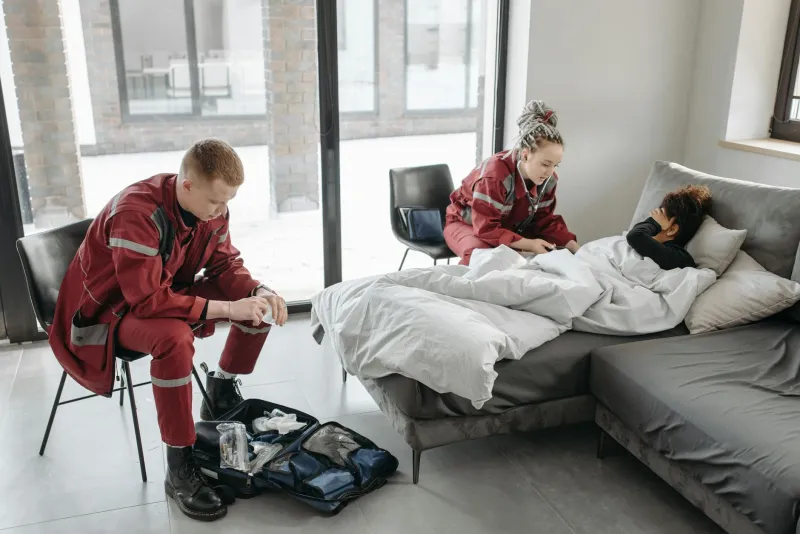
Dr. Miller knew that Tommy's mother always understated her son's symptoms, that Mr. Peterson's back pain flared up every winter, and that the Johnson family had a history of heart problems that went back three generations. He knew these things not because he read them in a chart, but because he had been their doctor for thirty years.
 Photo: Dr. Miller, via www.datocms-assets.com
The Era of the Lifetime Physician
For most of the 20th century, American families didn't shop for healthcare—they inherited it. The family doctor was exactly that: a physician who cared for entire families across decades. Dr. Miller might deliver a baby in 1952, treat that child's broken arm in 1960, help them through a difficult pregnancy in 1975, and eventually care for them in their final illness in 2010.
This wasn't just medical care; it was medical memory. Your doctor knew that your father had died of a heart attack at 55, that you'd had complications with anesthesia during your appendectomy, and that you tended to get anxious before blood draws. None of this was written down in elaborate detail—it lived in the physician's experience of knowing you.
The family doctor made house calls, knew your insurance situation without checking a computer, and could spot changes in your health that a specialist seeing you for the first time would miss entirely. When Mrs. Rodriguez seemed "off" during a routine visit, Dr. Miller knew to dig deeper because he'd been watching her for fifteen years.
The Specialist Revolution
Today's healthcare system operates on an entirely different principle: expertise through specialization. Instead of one doctor who knows everything about you, you have a cardiologist who knows everything about hearts, an endocrinologist who understands hormones, and a dermatologist who focuses solely on skin.
The average American now sees multiple healthcare providers each year. A routine physical might lead to referrals to three different specialists, each of whom operates with a narrow focus on their particular system. Your cardiologist excels at reading EKGs but might not know that you're also being treated for depression. Your dermatologist can identify skin cancer at a glance but has no idea about your family history of diabetes.
This fragmentation means that nobody has the complete picture. Your medical history exists in electronic records that theoretically connect everything, but in practice, each specialist is working with incomplete information about who you are and what your body has been through.
What Changed
The shift wasn't sudden, and it wasn't entirely negative. Medical knowledge exploded in the latter half of the 20th century. Procedures that would have been impossible for a general practitioner to perform became routine for specialists. The cardiologist performing your angioplasty today has skills that Dr. Miller could never have developed while also delivering babies and treating broken bones.
Insurance companies accelerated the change by creating financial incentives for specialized care and making it harder for family doctors to maintain profitable practices. Medical schools began steering their brightest students toward lucrative specialties rather than primary care.
The economics were compelling: specialists could charge more, see more patients, and focus on procedures rather than the time-intensive work of managing long-term relationships. Hospitals found it more profitable to employ teams of specialists than to support family doctors who might spend twenty minutes talking through a patient's concerns.
The Cost of Efficiency
What we gained in medical precision, we lost in medical wisdom. Today's healthcare system excels at treating diseases but struggles with treating people. The specialist who sees you for twelve minutes every six months might be technically superior to Dr. Miller, but they'll never develop the intuitive understanding that comes from watching someone's health evolve over decades.
Patients report feeling like numbers in a system rather than individuals with unique histories and concerns. The average primary care visit now lasts less than twenty minutes, barely enough time to address immediate symptoms, let alone understand the broader context of someone's life and health.
The electronic medical record, designed to improve continuity of care, often creates the illusion of connection while maintaining the reality of fragmentation. Your specialists can access your test results, but they can't access Dr. Miller's understanding of how you respond to stress, what symptoms you tend to ignore, or how your health patterns have changed over time.
The Search for Connection
Some Americans are trying to recreate what was lost. Concierge medicine attempts to restore the doctor-patient relationship by limiting patient loads and charging annual fees. Direct primary care practices eliminate insurance companies from routine care, allowing doctors to spend more time with patients.
But these solutions remain available primarily to those who can afford them. Most Americans navigate a healthcare system where continuity of care is accidental rather than intentional, where their medical history is data rather than relationship.
Then What Now?
The family doctor who knew four generations isn't coming back, and perhaps that's not entirely unfortunate. Modern medicine can perform miracles that Dr. Miller never could have imagined. But in our rush toward specialization and efficiency, we've lost something irreplaceable: the healing power of being truly known by the person responsible for our care.
The question isn't whether we can return to the past, but whether we can find ways to combine modern medical capabilities with the human understanding that once made healthcare feel less like a system and more like a relationship. Because while technology can store our medical data, only people can truly know our medical stories.