Six Thousand Choices Became Thirty Thousand: How the Supermarket Rewired American Dinner
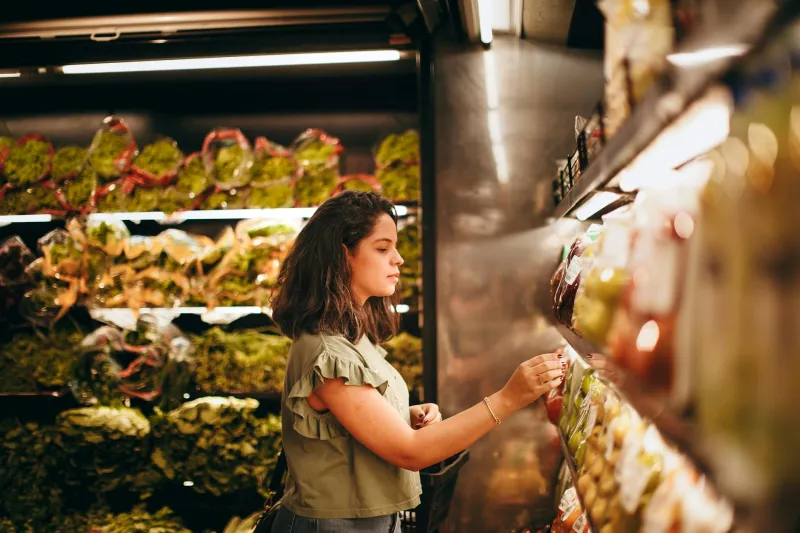
The Supermarket as Time Machine
Step into a grocery store in 1965, and the first thing you'd notice is the silence. No background music. No digital screens. No chaos.
There were roughly 6,000 products on the shelves—about one-fifth of what a modern supermarket carries. The produce section was genuinely seasonal. Strawberries in June meant something. Oranges appeared in winter. Asparagus was a spring luxury. If you wanted pineapple in February, you were making a statement about your family's wealth.
You knew the butcher by name. You probably knew the owner. The store manager could tell you where everything came from because he'd bought it from suppliers he'd worked with for decades. Canned goods dominated, but they were canned by companies with familiar names in your own region. Frozen foods were expanding, but they were still a novelty—and a luxury.
Your shopping list was short. Your dinner options were constrained. Your meal planning was, by modern standards, brutally simple.
And somehow, families still ate dinner together every night.
The Explosion Begins
The transformation started quietly in the 1970s and accelerated through the 1980s and 1990s. Supermarkets expanded from roughly 15,000 square feet to 50,000 or more. Aisles multiplied. New sections appeared: international foods, organic produce, prepared meals, specialty items.
The number of products didn't just double or triple. It exploded. By 2000, the average American supermarket carried 20,000 items. By 2010, that number had climbed to 30,000. Some mega-stores pushed toward 50,000.
What changed wasn't just the size of the store. It was the origin of what was being sold.
In 1965, most food in your local supermarket came from within 1,000 miles of where you lived. Regional differences in what people ate were real and pronounced. California ate differently than Georgia. Texas was distinct from Massachusetts. This wasn't multiculturalism—it was geography and logistics.
By 2000, that constraint had vanished. You could buy Chilean grapes in January, Thai curry paste in Nebraska, and Norwegian salmon in landlocked Kansas. The entire world's food supply was theoretically available in your neighborhood store, 52 weeks a year.
The Paradox of Infinite Choice
More choice sounds like pure benefit. It isn't.
Psychologists have spent decades studying what they call the "paradox of choice." When options are limited, decision-making is easy. When options explode, decision-making becomes paralyzing. The average shopper in 1965 spent about 20 minutes in the supermarket. Today, that's crept toward 40 minutes—and that's if you know what you want.
The explosion of choice didn't just make shopping longer. It changed the fundamental rhythm of American family life.
In 1965, dinner planning was constrained by what was available. You went to the store, saw what looked good, and built your meal around that. The decision-making process was bounded. You couldn't cook Thai food because Thai ingredients didn't exist. You couldn't make sushi because fresh fish wasn't available. You made pot roast, meatloaf, casseroles, and fried chicken—the foods your mother had made, using ingredients your mother had used.
This wasn't deprivation. It was structure.
Now, every night presents a genuine dilemma. Italian? Mexican? Thai? Korean? Indian? Vietnamese? The question "What should we eat?" has transformed from a simple logistical problem into an existential decision that can genuinely paralyze families standing in the supermarket on a Tuesday evening.
The Slow Disappearance of Dinner
Here's what happened next: many families stopped trying to decide.
The rise of prepared foods, frozen meals, and takeout restaurants accelerated precisely as supermarket choice exploded. It sounds contradictory—more options leading to fewer home-cooked meals—but it's actually predictable. When the decision-making burden becomes too heavy, people stop making decisions. They grab something pre-made instead.
In 1965, roughly 85% of American dinners were prepared at home. By 2000, that had dropped to 60%. By 2015, it was below 50%. Today, Americans spend more money on food eaten outside the home than on food prepared at home—a historical reversal that happened within a single generation.
The supermarket didn't cause this shift directly. But the explosion of choice played a role. When your options were limited, you adapted. When your options became unlimited, you often just gave up.
Meanwhile, the skills required to cook from basic ingredients began to vanish. If you can buy pre-made pad thai, why learn to make it from scratch? If the supermarket stocks 47 varieties of breakfast cereal, why teach your kids to make pancakes? The knowledge that had been passed down through generations—how to transform raw ingredients into meals—started to atrophy.
The Globalization of Dinner
Yet something genuinely valuable also happened.
The explosion of choice democratized access to ingredients that were once luxury items. Exotic spices that cost a fortune in 1965 became cheap and abundant. Fresh produce that was once seasonal became available year-round. Ingredients from every world cuisine became accessible to ordinary Americans.
This enabled a kind of culinary adventurousness that would have been impossible in 1965. A home cook today can, with minimal effort, access the ingredients to make authentic dishes from dozens of cuisines. The barrier to entry dropped from "be born into that culture" to "go to the supermarket."
But this democratization came with its own losses. When everyone could cook anything, regional and family food traditions began to fade. Your grandmother's specific way of making goulash or tamales or biscuits—the variations that made family cooking distinct and meaningful—became just another recipe on the internet, indistinguishable from a thousand others.
Food became more diverse and less particular. More global and less local. More available and less special.
The Cost Nobody Calculated
There's one more shift that's rarely discussed: the relationship between shopping and budgeting.
In 1965, the grocery store trip was straightforward. You knew roughly what things cost. You bought what you could afford. The constraint was real and immediate. Overspending wasn't really possible because you saw the prices and the dwindling cash in your hand.
Today, with 30,000 items competing for your attention, shopping has become a minefield of temptation. Premium versions of ordinary products line the shelves next to cheaper versions. Specialty items from around the world beckon. Food marketing has become exponentially more sophisticated. The average supermarket is designed to encourage spending, not economical purchasing.
The rise in household food spending over the past 50 years is partly about inflation, but it's also about choice. More options means more premium options. More premium options means higher average prices. The supermarket that offered choice also offered a subtle mechanism for spending more than you intended.
What Remained Constant
Here's what's strange: the fundamental human need for food hasn't changed. Families still need to eat. Kids still need to be fed. The rituals around meals still matter, even if they've become less common.
What changed is the path between hunger and satisfaction. In 1965, that path was narrow and well-worn. Everyone took roughly the same route. In 2024, there are a million possible paths, and no one can quite agree which one to take.
We gained infinite choice and lost the simplicity that choice once provided. We gained access to the world's cuisines and lost the distinct food traditions that made regions and families unique. We gained efficiency and lost the time spent together figuring out what to cook.
Your great-grandmother didn't need to make a decision standing in the supermarket on a Tuesday evening. She knew what she was making. She went to the store, got the ingredients, came home, and cooked.
Today, you have 30,000 reasons to feel uncertain about that same simple task. And somehow, despite all that choice, many of us are eating alone.