Reading the Sky Like a Book: When Americans Planned Life Around Pure Weather Guesswork
The Man Behind the Forecast
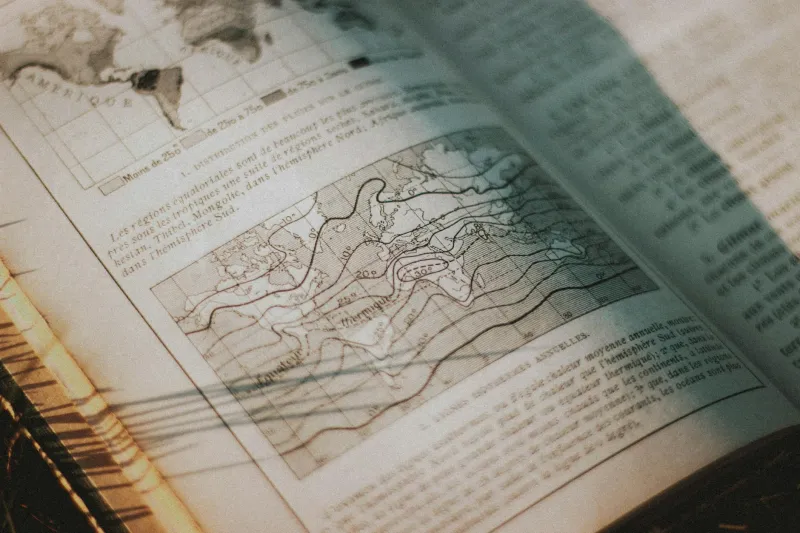
In 1955, if you wanted to know tomorrow's weather, you tuned into the evening news and watched a man in a suit point at a hand-drawn map. No satellite images. No computer models. No seven-day forecasts with hourly breakdowns. Just one person's best guess based on barometric pressure, wind patterns, and decades of experience reading the sky.
The weather forecast was accurate about 60% of the time — roughly the same odds as flipping a coin twice and getting heads at least once. Yet millions of Americans planned weddings, planted crops, and packed for vacations based on these educated guesses. They had no choice.
When Uncertainty Was Just Life
Consider what this meant for ordinary decisions. A farmer in Iowa couldn't check his phone to see if rain was coming in three hours. He watched the horizon, felt the humidity, and made his best judgment about whether to cut hay or wait another day. Getting it wrong meant losing a season's income.
Wedding planners couldn't browse week-long forecasts to pick the perfect Saturday. They chose a date, hoped for the best, and always had a backup plan. Outdoor receptions came with genuine suspense — nobody really knew what would happen until the morning of the event.
Families planning beach vacations packed for every possibility. A trip to the shore might mean sunny skies or three days of rain, and you wouldn't know which until you arrived. The phrase "pack for all weather" wasn't advice — it was survival.
The Folk Wisdom Economy
Without reliable forecasts, Americans developed an entire culture around reading natural signs. Farmers watched how animals behaved, noting that cows lying down might signal incoming rain. Sailors studied cloud formations and wind shifts. Grandmothers claimed their arthritis predicted storms better than any meteorologist.
These weren't quaint traditions — they were practical skills. When official forecasts were barely better than random guessing, local knowledge and natural observation often proved more accurate. A lifetime of watching the sky taught patterns that no barometer could capture.
Hardware stores stocked almanacs alongside hammers and nails. The Farmers' Almanac, with its blend of astronomy, folklore, and long-range predictions, sold millions of copies annually. People genuinely relied on moon phases and historical weather patterns to plan their lives.
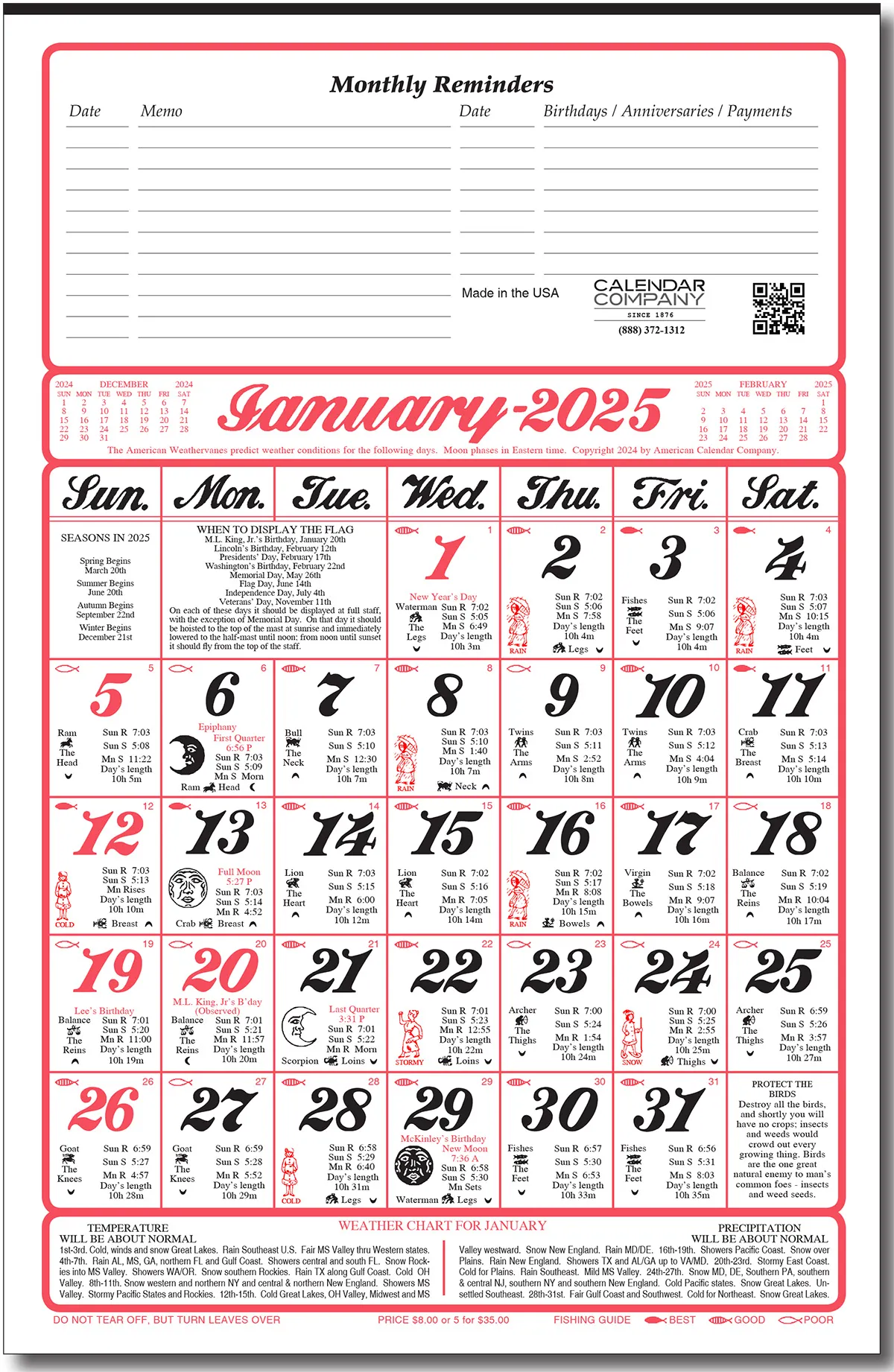 Photo: Farmers' Almanac, via www.calendarcompany.com
The Technology That Changed Everything
The transformation began in the 1960s with weather satellites, but the real revolution came with computer modeling in the 1970s and 1980s. Suddenly, meteorologists could see storm systems forming hundreds of miles away and track their movement with unprecedented precision.
Doppler radar arrived in the 1990s, allowing forecasters to peer inside storms and predict tornadoes with enough advance warning to save lives. What once killed without warning now came with 30-minute alerts and color-coded maps showing exactly where danger was heading.
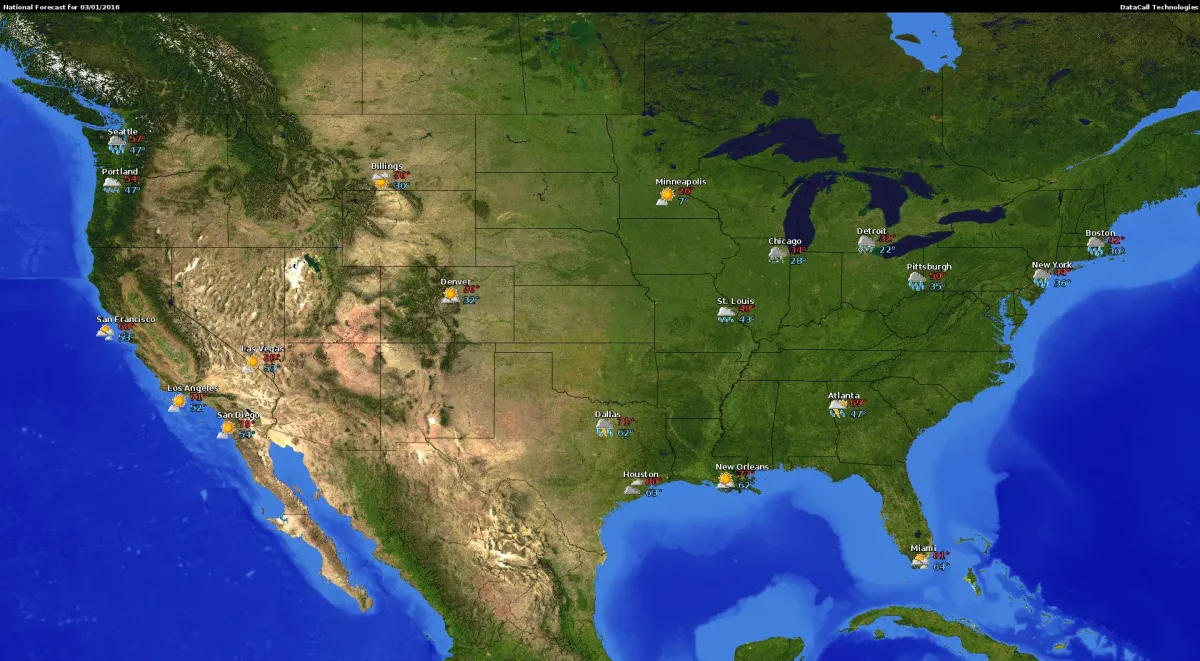 Photo: Doppler radar, via www.datacalltech.com
Today's weather apps provide hourly forecasts for the next ten days, precipitation probability down to the minute, and real-time radar that updates every few seconds. We carry more meteorological data in our pockets than entire weather services had access to fifty years ago.
Living Without Weather Anxiety
Perhaps the most striking difference was psychological. Americans in the 1950s didn't obsessively check weather forecasts because checking was pointless — the information simply wasn't there. This created a fundamentally different relationship with uncertainty.
People dressed in layers and carried umbrellas as a matter of course. They didn't cancel outdoor plans because of a 30% chance of rain — that level of precision didn't exist. Instead, they developed resilience and adaptability that we've largely lost.
Modern Americans can spiral into anxiety over weather forecasts that change by the hour, refreshing apps compulsively to see if that 40% chance of rain has shifted to 35%. Our ancestors would find this behavior baffling. They lived with real uncertainty and simply adapted as conditions changed.
The Forecast Revolution's Hidden Cost
Accurate weather prediction has undoubtedly improved life in countless ways. We can evacuate before hurricanes, protect crops from frost, and plan outdoor events with confidence. Lives are saved and economic losses prevented every day thanks to modern meteorology.
But something was lost in the transition. The skills that helped previous generations read natural signs have largely disappeared. The resilience that came from genuine uncertainty has been replaced by a low-level anxiety about forecasts that are still, ultimately, educated guesses.
We've traded the adventure of not knowing for the stress of knowing too much. Where our grandparents packed for all possibilities and adapted to whatever came, we now have the luxury — and burden — of precise expectations that can still be wrong.
Then What Now?
The next time you check your weather app for the third time in an hour, remember that most of human history involved making plans without any reliable forecast at all. Americans once built their entire agricultural economy around reading the sky and hoping for the best.
They weren't more foolish or less informed — they were working with the tools available. And in many ways, their acceptance of uncertainty created a more adaptable, resilient culture than our current obsession with predicting the unpredictable.
Sometimes the best forecast is simply being prepared for anything.