When Fandom Was Local: The Barbershop Arguments That Built Sports Culture
The Anticipation Economy
In 1975, if your hometown team played a night game, you couldn't watch it unless you were in the stadium or had a television and happened to be home at the right time. There was no streaming. No highlights. No instant replays available on demand. You had two options: listen on the radio with your neighbors, or wait until the next morning to read about it in the newspaper.
This constraint sounds like deprivation to modern ears. It was actually the foundation of a different kind of sports culture entirely—one built on anticipation, local identity, and the kind of arguments that only happen between people who know they'll see each other again tomorrow.
The sports fan of 1975 wasn't a consumer of content. He was a member of a community bound by shared uncertainty.
The Radio Broadcast as Event
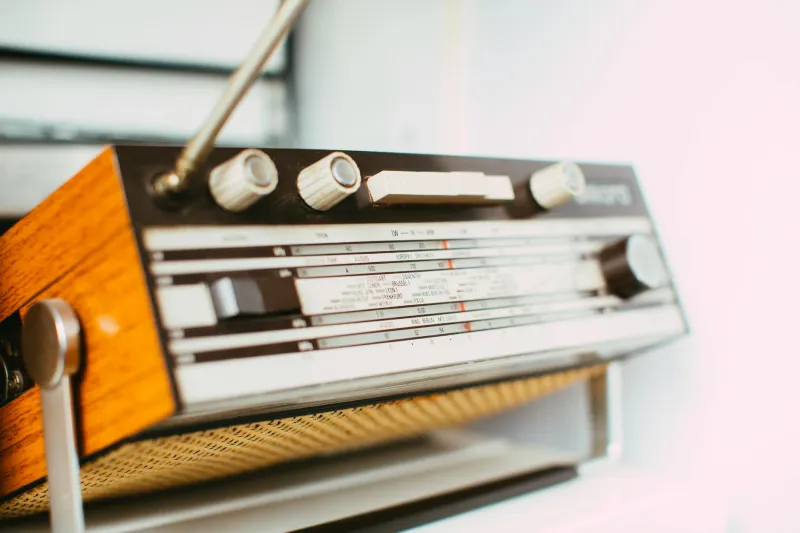
On a summer evening in 1970, the local AM radio station would broadcast the home team's game live. The announcer's voice was the only connection you had to what was happening on the field. You couldn't see the action. You constructed it in your mind based on his descriptions, his tone of voice, the crowd noise in the background.
This created a strange intimacy. The announcer wasn't a distant television personality. He was a neighbor broadcasting from the stadium, describing events in real time, with genuine emotion in his voice. If your team was losing, you could hear the disappointment. If they were winning, you could hear the excitement. The broadcast was a direct emotional transmission from someone you felt you knew.
Families would gather around the radio. Neighbors would sit on porches with transistor radios, listening together. The game became a communal experience not because everyone was watching the same screen, but because everyone was listening to the same voice describe the same uncertain outcome.
When the game ended, the experience didn't continue. There was no postgame show, no analyst breakdown, no Twitter debate. The game was over. You went to bed. The next morning, you'd read the box score in the newspaper and maybe see a few paragraphs of recap.
The Morning After Ritual
The newspaper box score was the official record of what had happened. It was also a compressed narrative that required interpretation.
A box score tells you the final score, the statistics, and maybe a basic account of the key moments. But it doesn't tell you how the game felt. It doesn't capture the momentum shifts or the near-misses or the controversial calls. To understand what had happened, you needed to read the sportswriter's account—and different newspapers had different sportswriters with different perspectives.
So on the morning after a big game, a fascinating thing happened: people argued about what had actually occurred.
Two men might have read two different newspaper accounts and come away with genuinely different understandings of the game. The sportswriter for the morning paper emphasized one sequence of events. The sportswriter for the afternoon paper emphasized another. Neither had video evidence to consult. Neither could rewind and watch the controversial play again.
This created a kind of productive ambiguity. The meaning of the game wasn't settled. It was negotiable. You could make an argument, and that argument couldn't be instantly disproven by someone pulling out their phone and showing you the replay.
The Barbershop as Forum
This is where the barbershop came in.
On a Saturday morning in 1968, a man walked into his barber's chair and the first thing the barber said was: "Did you see that game last night?" Except he hadn't seen it—he'd listened to it on the radio while cutting hair. So had three other customers waiting in chairs. So had the owner, who'd been sweeping up while the game was on.
For the next hour, while haircuts were happening, a debate would unfold. Was the home run in the third inning the turning point, or was it really the error in the seventh? Did the umpire make the right call? Was the manager's decision to pull the pitcher premature? Everyone had listened to the same broadcast, but everyone had constructed a slightly different narrative from it.
These weren't arguments between strangers on the internet. These were men who saw each other every week, sometimes every day. The barber who cut your hair was the same barber who'd been cutting it for five years. The owner of the shop was someone you'd known since high school. The other customers were neighbors.
This created a specific kind of accountability. You couldn't just say whatever you wanted and disappear. You'd see these people again. Your reputation among them mattered. Your arguments had to be coherent enough to defend in person.
The barbershop debate wasn't about winning. It was about participation in a community conversation that mattered to everyone in it.
The Local Team as Identity
Being a sports fan in 1975 was almost entirely a function of geography. You rooted for the local team because that was your team. Period. There wasn't really an option to follow a team three states away because you liked their uniforms or their star player. Following a distant team meant either traveling to see games or listening to radio broadcasts that your local station might not even carry.
So fandom was local. Your team was your city's team. Your rivals were the other cities' teams. The games mattered because they represented your place competing against other places. The players were part of your community in a way that's hard to explain to someone who grew up with national media coverage.
If the team was good, you walked around with a kind of civic pride. If they were bad, you bore that shame collectively. The team's record was, in some small way, a reflection on your city and on you as a resident of that city.
This created a different relationship between fan and team. It wasn't transactional. You didn't root for them because they were winning. You rooted for them because they were yours.
The Waiting Period
The structure of the sports calendar was also different when information moved slowly.
In 1970, the World Series happened in October. It was a genuine event—a series of games that happened in sequence, each one a new story, each one building on what came before. You couldn't binge-watch the series. You had to wait a day between games. You had to sit with the result, argue about it, speculate about what would happen next.
The gap between games was filled with newspaper analysis, radio discussion, and barbershop argument. The event stretched over time in a way that created genuine suspense.
Now, a playoff series is over in three days. You can watch all the games in one sitting if you want. The narrative is completed immediately. There's no time for anticipation to build, no time for argument to develop its own rhythm.
What Changed First
Television started the transformation in the 1960s. Suddenly, you could watch games on your screen instead of just listening on the radio. The visual information was richer. The experience was less collaborative—you watched individually or with your immediate family, not with the whole neighborhood gathered around a radio.
Cable television accelerated the change in the 1980s. Suddenly, you could watch games from other cities. The local team was no longer your only option. You could follow a distant team if you wanted. Fandom became a choice rather than a fact of geography.
But the real transformation came with the internet and smartphones. Now, every game is available instantly. Highlights are available before the game ends. Statistics are updated in real time. The debate doesn't happen in the barbershop the next morning—it happens on Twitter during the game itself, with thousands of strangers.
The Loneliness of Total Access
Here's the strange paradox: you have more access to sports than ever, and yet something about the experience feels diminished.
You can watch any game, anytime, from anywhere. You can follow teams from different cities, different countries. You can engage in sports debate with millions of people simultaneously. You have instant access to expert analysis, detailed statistics, and replay footage from every angle.
And yet the experience is oddly solitary. You're watching on a screen, usually alone. The debate happens with strangers on the internet who you'll never see again. There's no accountability. There's no community. There's just an endless stream of content and commentary.
The barbershop is gone. The radio broadcast gathering on the porch is gone. The morning newspaper conversation is gone. In their place is a 24/7 sports media machine that generates content constantly, regardless of whether there are games happening.
Your great-grandfather knew his team intimately because he saw them play in person or heard them described by a voice he recognized. He debated their performance with men he saw every week. He waited for the game with genuine anticipation because he didn't know what would happen.
You know your team's statistics better than he ever could. You've seen replays from angles he couldn't have imagined. You've heard analysis from dozens of experts.
But you might not know your neighbors. And you've never had to defend your opinion to someone you'll see tomorrow.
Something was gained in that trade. But something irreplaceable was also lost.