Your Grandfather's Doctor Bill Was Cheaper Than Dinner: The $5 House Call Era
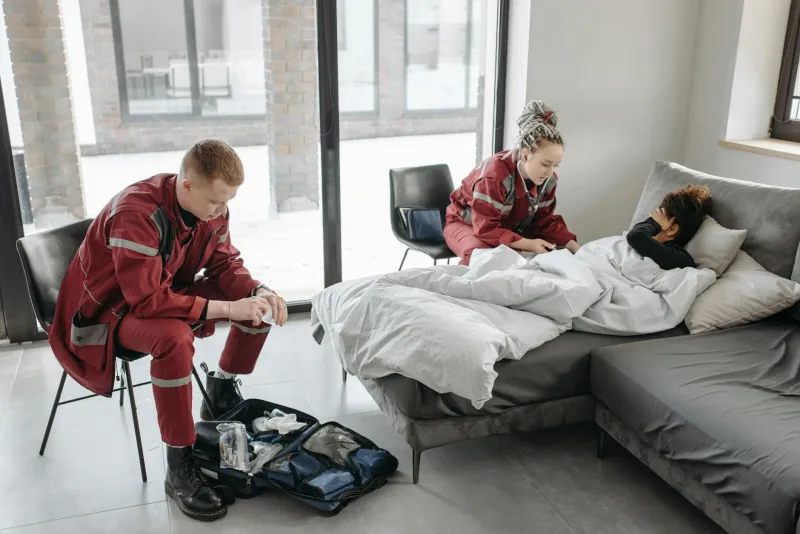
In 1960, Dr. Robert Chen made house calls throughout suburban Minneapolis for $5 per visit. His patients paid cash from the cookie jar, treated medical care like any other household expense, and never worried about networks, deductibles, or prior authorization. A routine checkup cost less than a family meal at Denny's.
 Photo: Dr. Robert Chen, via www.myprivia.com
That world feels like ancient history now, but it existed within living memory. Your grandparents lived through an era when healthcare was genuinely affordable — not subsidized, not discounted, just priced like everything else Americans bought without financial stress.
When Medical Bills Fit in Your Wallet
A typical doctor's office visit in 1960 cost between $3 and $6, depending on your location. Adjusted for inflation, that's roughly $30 to $50 in today's money — except today's equivalent visit averages $200 to $300 without insurance.
The comparison gets even more striking when you look at what $5 could buy in 1960. That same money covered a movie ticket with popcorn, a full tank of gas for a small car, or a complete dinner for two at a mid-range restaurant. Medical care wasn't cheap because quality was poor — it was cheap because the entire system operated differently.
Families budgeted for healthcare the same way they budgeted for groceries or utilities. The Johnsons of Oak Park, Illinois, kept a "doctor fund" in an old coffee can, adding a few dollars each month to cover their family's medical needs. When someone got sick, they grabbed money from the can and walked to Dr. Morrison's office down the street.
The Doctor Down the Street
Most American neighborhoods had a family doctor who knew everyone's names, medical histories, and family circumstances. These physicians operated small practices with minimal overhead — usually just a nurse-receptionist and basic equipment. They made house calls for serious cases and maintained office hours that accommodated working families.
Dr. Patricia Williams ran a typical family practice in 1960s Detroit. Her office occupied the ground floor of a converted house, with examining rooms that looked more like someone's living room than a modern medical facility. She charged $4 for routine visits, $8 for house calls, and $15 for minor procedures. Most patients paid immediately in cash, though she kept a small ledger for families experiencing temporary hardship.
The relationship between doctor and patient was fundamentally different. Without insurance companies mediating every interaction, physicians could spend whatever time they felt each patient needed. Dr. Williams often spent 20-30 minutes with patients, discussing not just immediate symptoms but overall health, family concerns, and prevention strategies.
The Simple Economics of Simple Medicine
The healthcare system of the 1960s succeeded partly because it remained relatively simple. Most family doctors handled everything from routine checkups to minor surgery, broken bones, and childbirth. Specialists existed but were rarely needed for common problems.
Hospital stays were shorter and less intensive. A typical childbirth required a two-day hospital stay costing about $100 — roughly equivalent to $800 today. Compare that to modern delivery costs, which average $10,000 to $15,000 without complications.
Pharmaceuticals were also dramatically cheaper. A bottle of penicillin that might save your life cost about $2 in 1960. Most prescriptions were filled by local pharmacists who knew their customers personally and often extended credit during tough times.
When Insurance Was Actually Insurance
Health insurance in the 1960s worked like car insurance or homeowner's insurance — it covered unexpected major expenses, not routine maintenance. Most Americans paid for regular checkups, minor illnesses, and prescription drugs out of pocket, using insurance only for serious accidents or major medical procedures.
This system kept costs low because it eliminated layers of administrative complexity. Doctors didn't need large billing departments to navigate dozens of different insurance plans. Patients didn't need to understand networks, co-pays, or coverage limits. Healthcare transactions were as straightforward as buying groceries.
The Turning Point
The transformation began in the 1970s with well-intentioned efforts to expand healthcare access. Medicare and Medicaid, launched in 1965, brought government funding into the system. Employer-provided insurance became more comprehensive, covering routine care rather than just emergencies.
Each change added administrative complexity and removed price transparency. When patients stopped paying directly for routine care, they lost awareness of actual costs. When insurance companies began negotiating rates, the simple relationship between doctor and patient became a complex triangle involving multiple intermediaries.
By 1980, the average doctor's visit cost $20 — still reasonable, but four times the 1960 rate after adjusting for general inflation. By 2000, that figure had reached $100. Today, the same visit averages $200-300, representing a roughly 1,000% increase beyond general inflation since 1960.
What We Actually Lost
The $5 house call era wasn't perfect. Medical technology was limited, some conditions that are easily treatable today were death sentences, and access was uneven across different communities. But the system offered something we've completely lost: predictable, affordable healthcare that ordinary families could budget for and afford.
Modern medicine can perform miracles that 1960s doctors couldn't imagine, but it's created a system where those miracles are financially devastating for many families. We've gained incredible medical capabilities while losing the simple accessibility that once made healthcare a normal part of American family life.
The next time you see a medical bill that costs more than your monthly grocery budget, remember when your grandfather could visit the doctor, get treated, and pay the bill with the change from his pocket — and still have enough left over to take your grandmother out for dinner.