Box Scores and Static: How Americans Followed Sports Before the Internet Knew What a Highlight Was
Box Scores and Static: How Americans Followed Sports Before the Internet Knew What a Highlight Was
Imagine this: It's October 1955. The Brooklyn Dodgers just won their first World Series. You weren't at Ebbets Field. You weren't watching on television — your family doesn't own one yet, and even if you did, Game 7 wasn't broadcast in your city. You heard it on the radio, crouched over the speaker in your kitchen, and then you waited until morning to read the full account in the newspaper. That box score in the Daily News was the closest thing to a replay you were going to get.
For most of American sports history, that was the deal. And somehow, people loved their teams just as fiercely as fans do today.
The Radio Was the Stadium
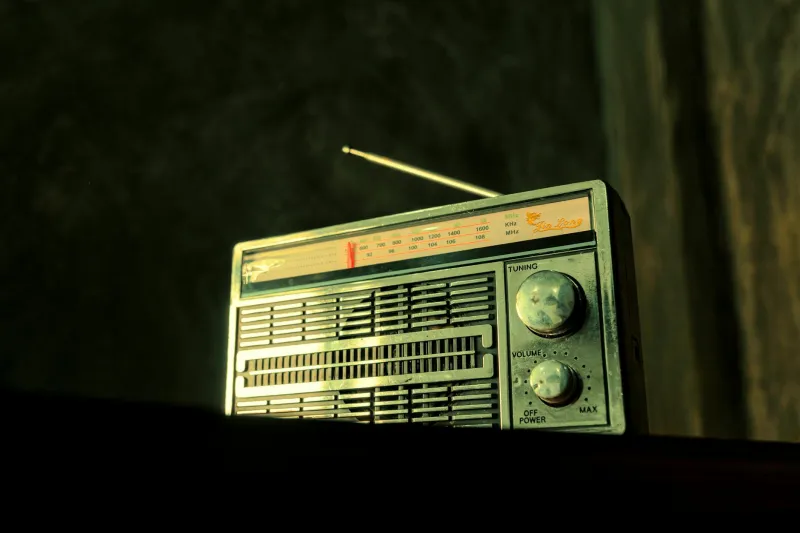
Long before television came to dominate American living rooms, radio was the primary connection between fans and their teams. By the 1930s, play-by-play broadcasts had become a cultural institution. Announcers like Red Barber and Mel Allen weren't just reporting — they were storytelling, painting pictures with their voices for listeners who had no other way to follow along.
For out-of-market games, the situation was even more creative. Many radio stations received only a telegraph feed of the game — raw data, pitch by pitch — and announcers would reconstruct the action in real time from those sparse updates, sometimes improvising details when the wire went quiet. A young Ronald Reagan famously did this for Cubs games in Iowa before his Hollywood career took off. The broadcast felt live. It was, in a meaningful sense, theater.
And when the radio cut out — which it did, often — you waited. There was no alternative.
The Newspaper Was the Replay
For the vast majority of the 20th century, the morning newspaper was where sports actually lived. Not as breaking news, but as the definitive account of what happened. Sportswriters weren't competing to be first — they were competing to be best. The craft of the game story, the column, the analysis piece, was taken seriously in a way that feels almost quaint now.
Readers studied box scores with the concentration of a chess player reviewing a match. Every stat was precious because stats were scarce. You couldn't pull up a player's career splits on your phone. If you wanted to know how Mickey Mantle hit in day games versus night games, you needed to either have been paying close attention for years or know someone who had.
That scarcity created a different kind of fan. One who remembered things, debated things, and built arguments from memory rather than instant lookup.
Television Changed the Game — Slowly
Televised sports arrived in the late 1940s but took decades to become the dominant medium. Early broadcasts were limited, local, and technically rough. NBC's first televised World Series was in 1947, reaching a relatively small number of sets in a handful of cities.
Through the 1950s and into the 60s, most regular-season games still weren't on TV. Monday Night Football didn't launch until 1970. Before that, watching your team on television was an event — something that happened occasionally, not something you assumed.
Even when games were broadcast, there were no replays until the technology was developed in the early 1960s. The first instant replay appeared during the 1963 Army-Navy game. Viewers were reportedly confused — some thought the Army quarterback had scored twice. The idea that you could see something again immediately was genuinely novel.
ESPN and the 24-Hour Transformation
ESPN launched in September 1979, broadcasting to a few million cable subscribers and filling airtime with Australian Rules Football and slow-pitch softball. Nobody predicted what it would become.
Within a decade, SportsCenter had turned into the nightly ritual for a generation of American sports fans. The highlight reel — that compressed, perfectly soundtracked summary of everything that happened — became the primary way people consumed sports they hadn't watched live. The anchors became celebrities. The catchphrases became part of the culture.
Then the internet arrived, and the pace accelerated past anything ESPN had imagined. By the mid-2000s, score alerts were hitting phones in real time. By the 2010s, Twitter had turned every game into a simultaneous second-screen experience. Today, if you're watching a game live, you're already behind the conversation happening online about it.
What We Traded Away
The access is staggering now, and it's genuinely hard to argue against it. You can watch any out-of-market game. You can pull up any stat in seconds. You can watch the same dunk or catch from seventeen different angles within minutes of it happening.
But there's a texture to fandom that the old model had — built from scarcity, from patience, from the ritual of waiting — that doesn't quite exist anymore. When you had to wait for the morning paper to confirm what you'd heard on the radio, the game lived in your imagination overnight. You turned it over, replayed it in your head, talked about it with people who'd experienced the same incomplete version of events.
Now sports is content. It's available every hour of every day, packaged for consumption and debate and immediate replacement by the next thing. The games haven't changed. But the relationship between a fan and a team, built over a lifetime of attention and memory, might be harder to sustain when everything is already available and nothing needs to be waited for.
Then what now? The box score is still there — it's just buried under seventeen hours of takes.