Appointment Television: When America's Living Rooms Moved to the Same Beat
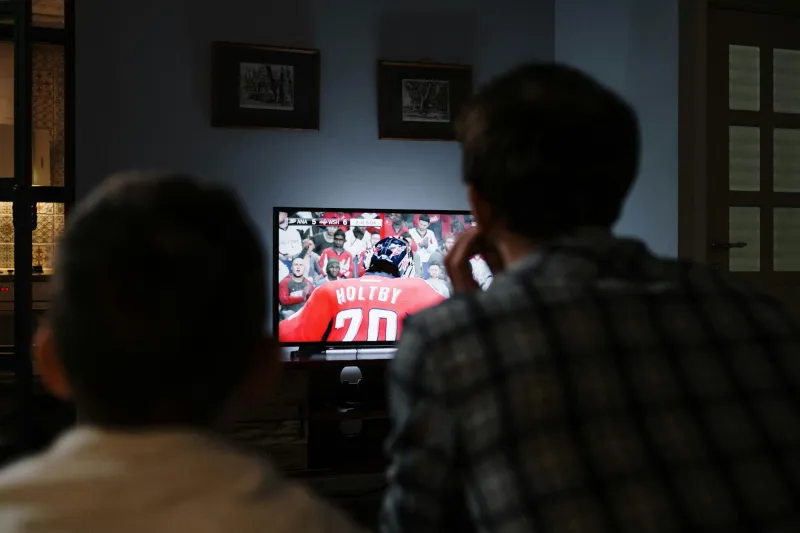
Every Thursday night at 8 PM, America stopped what it was doing and gathered around television sets to watch the same thing. Not most of America — literally tens of millions of families, all tuning to the same channel at the exact same moment, creating a shared national experience that would be impossible to replicate today. When "Cheers" aired its finale in 1993, 93 million Americans watched simultaneously. To put that in perspective, that's more people than have ever watched a Super Bowl.
This wasn't just entertainment — it was cultural choreography on a massive scale.
When Three Channels Ruled America's Clock
In the era of appointment television, roughly from the 1950s through the early 2000s, American families didn't choose what to watch. NBC, CBS, and ABC chose for them, and families arranged their lives accordingly. Dinner happened before or after your shows, not during them. Homework was scheduled around prime time. Even bedtime was negotiated based on what was ending at 9 PM versus 10 PM.
The TV Guide wasn't just a magazine — it was America's social calendar. Families planned their weeks around must-see television, marking shows they couldn't miss and scheduling everything else around those immovable appointments. If "Dallas" aired Friday nights, Friday night plans happened after 10 PM or not at all.
This scheduling tyranny created something remarkable: a truly shared cultural experience. When J.R. Ewing was shot, the entire country speculated together about who did it. When a special episode of "Diff'rent Strokes" dealt with serious issues, millions of American families had the same conversation in their living rooms the next morning.
The Water Cooler Was America's First Social Network
Before Twitter gave everyone a platform to share their immediate reactions, Americans processed television together at work the next day. The office water cooler became the nation's original social media platform, where people gathered to dissect the previous night's episodes, debate plot twists, and share theories about what would happen next.
These conversations weren't optional social pleasantries — they were essential cultural participation. If you missed "Seinfeld" on Thursday night, you were genuinely left out of Friday morning's conversations. There was no catching up later, no binge-watching the season on demand. You were either part of the collective viewing experience or you were culturally isolated until the rerun aired months later.
This created a unique form of social pressure that kept families glued to their sets. Missing a popular show didn't just mean missing entertainment — it meant missing out on the shared cultural references that would dominate conversations for days afterward.
When Scarcity Created Community
The limitations of broadcast television — only three major networks, fixed schedules, no ability to pause or rewind — created constraints that paradoxically built stronger communities. Families had to negotiate what to watch together because there was literally only one television in most homes. Parents and children found common ground in shows that appealed to multiple generations simultaneously.
Special television events became genuine national holidays. When "Roots" aired over eight consecutive nights in 1977, it wasn't just a miniseries — it was a shared national reckoning with American history that happened in real time, in living rooms across the country, with families talking through the episodes together. The final episode drew 100 million viewers, representing nearly half of all Americans.
Even regular weekly programming created rhythms that structured American social life. "The Ed Sullivan Show" on Sunday nights marked the end of the weekend for an entire generation. "Monday Night Football" gave working-class America permission to extend the weekend by one more night. "Saturday Night Live" became the official end of the social week for young adults.
The Tyranny of Choice Destroyed the Appointment
The death of appointment television didn't happen overnight. Cable television started fragmenting the audience in the 1980s, giving viewers dozens of channels instead of three. VCRs allowed people to record shows and watch them later, breaking the iron grip of network schedules. But the real revolution came with streaming services that offered infinite content available anytime.
Netflix didn't just change how we watch television — it destroyed the very concept of watching television together. When every viewer became their own network programmer, choosing what to watch and when to watch it, the shared cultural experience that appointment television created simply evaporated.
Today's most popular streaming shows might be watched by millions of people, but they're watched individually, at different times, at different paces. There's no collective gasp when a character dies because viewers discover that death on their own schedule. There's no shared anticipation for next week's episode because next week's episode is already available.
What We Lost When We Gained Control
The streaming revolution gave Americans unprecedented control over their entertainment choices, but it also eliminated one of the last remaining shared experiences in an increasingly fragmented culture. When families watched television together because they had no other choice, they had conversations they might never have had otherwise. When the entire country watched the same shows, we had a common cultural vocabulary that transcended regional and class differences.
Appointment television forced Americans to be present in the moment. You couldn't pause the show to check your phone, couldn't fast-forward through commercials, couldn't binge-watch entire seasons in a weekend. You had to engage with entertainment at the pace it was delivered, which created a different kind of attention and a different kind of appreciation.
The commercials themselves became part of the shared experience. Everyone saw the same advertisements, creating common cultural references that lasted for decades. "Where's the beef?" and "I can't believe I ate the whole thing" weren't just advertising slogans — they were shared cultural touchstones that brought Americans together through common experience.
The End of Cultural Synchronicity
In today's entertainment landscape, there's no such thing as must-see TV because there's no such thing as appointment TV. We've gained infinite choice and perfect convenience, but we've lost the cultural synchronicity that once made television a truly communal experience. We no longer move to the same beat because we no longer have to, and something essential has been lost in that liberation.
When America's living rooms all tuned to the same frequency, we were accidentally practicing democracy — learning to share space, negotiate preferences, and participate in collective experiences. The death of appointment television didn't just change how we watch TV; it changed how we experience culture together. And in a country that feels increasingly divided, we've lost one of the few remaining rituals that actually brought us into the same room at the same time, watching the same story unfold.