The Great Indoors: How American Kids Lost Their Freedom to Wander
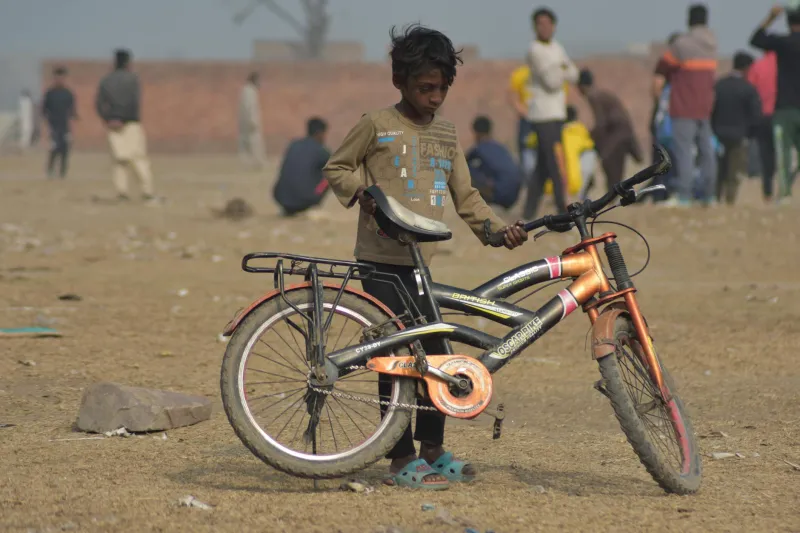
The Great Indoors: How American Kids Lost Their Freedom to Wander
Picture this: It's 1978, and ten-year-old Sarah pushes through the screen door at 9 AM, her mom calling out "Be back for dinner!" from the kitchen. No cell phone. No GPS tracker. No scheduled activities. Just a bike, a few quarters, and the entire day stretching ahead like an unwritten story.
Sarah won't see home again until the streetlights flicker on twelve hours later. She'll bike to the creek behind the elementary school, build a fort with kids from three blocks over, walk to the corner store for penny candy, and maybe catch a matinee at the local theater if she can scrape together enough change from couch cushions.
Fast-forward to 2024. Ten-year-old Emma's day looks radically different. Soccer practice at 10, art class at 2, a supervised playdate at 4. Her parents know her exact location at all times, thanks to a smartwatch that doubles as a GPS beacon. The idea of Emma biking unsupervised to an unsupervised creek with unsupervised kids? That's not childhood adventure—that's a CPS call waiting to happen.
When America's Neighborhoods Were Playgrounds
The transformation didn't happen overnight, but the statistics tell a stark story. In 1969, 48% of children walked or biked to school. By 2009, that number had plummeted to 13%. The distance hadn't changed—the same schools, the same neighborhoods—but something fundamental had shifted in how America thought about childhood safety.
Back then, summer vacation meant genuine freedom. Kids formed loose tribes that crossed age groups and social boundaries. The eight-year-old down the street might team up with teenagers from the next block for an impromptu baseball game in the vacant lot. Adult supervision was minimal and mostly reactive—parents intervened when someone came home bleeding, not before.
Children developed what researchers now call "environmental competence"—the ability to navigate physical and social spaces independently. They learned to read strangers, negotiate with peers, handle minor emergencies, and most importantly, entertain themselves for hours without external structure.
The Slow Strangling of Independence
The shift began in the 1980s and accelerated through the 1990s. High-profile kidnapping cases dominated news cycles, even though statistics showed that stranger abductions remained extraordinarily rare. The 24-hour news cycle amplified every danger, turning statistical anomalies into perceived epidemics.
Parents who had grown up roaming freely began pulling their children closer. Playdates replaced spontaneous gatherings. Structured activities filled the void left by unstructured time. What had once been normal—children managing their own social lives and entertainment—began to feel irresponsible.
The changes compounded. As fewer kids played outside unsupervised, the remaining ones stood out more, drawing concerned looks from neighbors. Parents who might have been comfortable with moderate freedom felt pressure to conform to increasingly protective norms.
The Scheduled Generation
Today's children live in a world of managed experiences. The average American child spends 7 hours a week in structured sports compared to just 30 minutes in unstructured outdoor play. Their days are choreographed: school, activities, homework, screen time, bed. The gaps between scheduled events get filled with more scheduling.
This isn't necessarily bad—modern kids often develop skills and talents that would have been impossible in previous generations. They play competitive sports year-round, take music lessons, learn coding, participate in enrichment programs that previous generations couldn't have imagined.
But something got lost in translation. Modern children report higher levels of anxiety and depression than previous generations. They struggle with unstructured time, often saying they're "bored" within minutes of finishing a scheduled activity. Many reach college having never navigated conflict with peers without adult mediation, never solved logistical problems independently, never experienced the particular satisfaction of creating their own entertainment from nothing.
What the Numbers Don't Capture
The statistics tell part of the story—fewer kids walking to school, more time in structured activities, increased parental supervision. But they can't quantify what Sarah experienced in 1978 that Emma misses in 2024.
They can't measure the confidence that comes from successfully navigating a disagreement with kids from different backgrounds without adult intervention. Or the creativity sparked when boredom forces invention. Or the resilience built by handling minor scrapes and disappointments without immediate parental rescue.
They can't capture the particular magic of summer afternoons that stretched endlessly, where the biggest decision was whether to ride bikes to the swimming hole or build a better fort in the woods.
The Price of Protection
None of this is to romanticize the past or demonize concerned parents. The world has changed in real ways—more traffic, different neighborhood dynamics, evolved family structures. Parents today face pressures and expectations that didn't exist in previous generations.
But the pendulum may have swung too far. In our effort to protect children from every possible harm, we may have protected them from experiences that build competence, confidence, and creativity.
Some communities are recognizing this trade-off. "Free-range parenting" movements encourage age-appropriate independence. Some schools have implemented unstructured recess. A few neighborhoods are rediscovering the radical concept of letting children walk places alone.
The question isn't whether we can return to 1978—we can't and probably shouldn't. But we might ask: In our rush to keep children safe, what did we forget to keep alive? And in a world where childhood has become a managed experience, what are we managing them out of?